墨
Character Story & Explanation
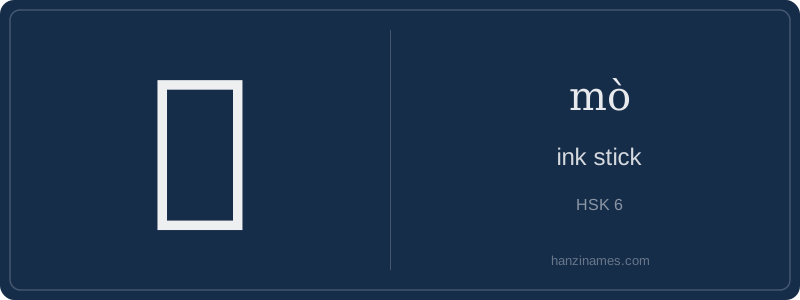
墨 remains actively used in traditional Chinese calligraphy, ink painting, and classical education. Artists and students grind ink sticks daily in studios and schools across China; the phrase 磨墨 (mó mò, 'grind ink') appears in idioms like 磨墨濡毫 (grind ink, wet the brush), symbolizing preparation for serious writing or art. The Four Treasures of the Study (文房四宝) include 墨 alongside brush, paper, and inkstone—formally codified since the Southern Dynasties (5th c. CE).
Historically, 墨 evolved from oracle-bone script pictographs of ink particles in a container, but its modern form dates to seal script (c. 3rd c. BCE), combining 土 (earth, for glue/ash base) and 黑 (black, for soot). Today, people commonly say 一锭墨 (yī dìng mò) when referring to a single ink stick—'ding' being the traditional unit of measurement for solid ink.
墨 (mò) is the Chinese character for 'ink stick'—a solid, compressed mixture of soot and animal glue traditionally used in East Asian calligraphy and painting. Unlike Western liquid inks, ink sticks are ground with water on an inkstone to produce fresh, nuanced black ink. This ritual emphasizes mindfulness, control, and material intimacy, reflecting deeper cultural values of discipline and harmony between human action and natural medium.
The character 墨 belongs to the 土 (earth) radical, signaling its material origin: traditional ink was made from burned pine soot (a carbon product) bound with earth-derived glue (e.g., hide glue). Its 15-stroke structure includes 黑 (black) at the bottom, reinforcing its semantic link to darkness and pigment. Historically, ink production reached artistic refinement during the Tang and Song dynasties, with famed 'Huizhou ink' still prized today.
In modern usage, 墨 extends metaphorically beyond physical ink to signify writing, scholarship, and literary talent—e.g., 胸有成竹,下笔如墨 ('with bamboo fully formed in mind, brush strokes flow like ink'). It contrasts with Western ink’s industrial uniformity: while fountain pen ink prioritizes consistency and convenience, 墨 embodies process, presence, and aesthetic variability—each grinding yielding subtle tonal shifts essential to expressive brushwork.
Example Sentences
Common Compounds
Similar Characters — Don't Mix These Up
Your First Step into Chinese Culture: Get a Chinese Name
Every journey into Chinese begins with a name. Use our free Chinese name generator to create a meaningful, personalized Chinese name that fits you perfectly.
Get My Chinese Name →