孤
Character Story & Explanation
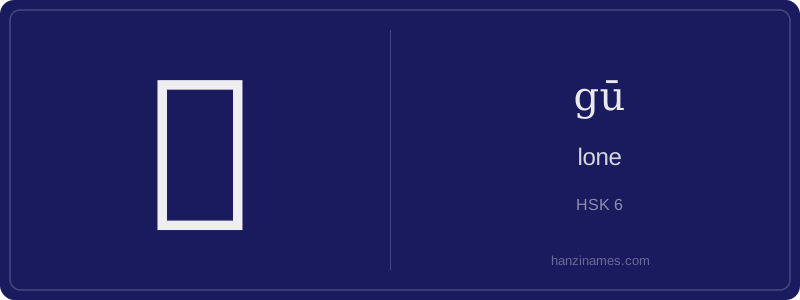
Historically, 孤 was used by monarchs and high officials as a modest self-reference — e.g., the emperor might say 'this孤' ('this lone one') to express humility before Heaven or ministers. This usage appears in pre-Qin texts like the *Zuo Zhuan* and continued through imperial edicts. Today, it survives in set phrases like 孤儿院 (gū’eryuàn, 'orphanage') and literary expressions such as 孤灯 (gū dēng, 'solitary lamp') in poetry. It's also common in legal and social welfare terms like 孤寡老人 (gūguǎ lǎorén, 'elderly without family support').
The character evolved from seal script; its modern form combines 子 (child) and 瓜 (originally thought to be a phonetic component, though debated — modern research suggests 瓜 may have been a corrupted form of 古 gǔ, serving phonetically). No pictographic origin exists — it’s a phono-semantic compound, not a picture of isolation.
Hi students! Let’s explore 孤 (gū), a character meaning 'lone' or 'solitary'. It’s not just about physical aloneness — it carries emotional weight, like dignified solitude or vulnerable isolation. You’ll see it in formal and literary contexts more than casual speech. Its radical 子 (zǐ) means 'child', hinting at an ancient association with orphaned or unsupported youth — a clue to its deeper connotation of being without familial or social backing.
Don’t confuse 孤 with simpler words for 'alone' like 独 (dú). 孤 implies a sense of abandonment, loss of status, or noble self-reliance — think of a widowed ruler calling themselves 孤家寡人 ('lone ruler, few people'), a humble yet solemn self-reference used historically by emperors. This duality — vulnerability and authority — makes it rich but nuanced.
At HSK Level 6, 孤 appears in advanced reading: classical poetry, historical texts, and formal essays. While rare in daily chats, you’ll encounter it in idioms like 孤掌难鸣 (a single palm can’t make a sound — 'one person can’t accomplish much alone'). Mastering it helps you grasp subtle emotional and hierarchical layers in Chinese expression — especially how loneliness is framed not as weakness, but as a condition shaped by relationship and role.
Example Sentences
Common Compounds
Similar Characters — Don't Mix These Up
Your First Step into Chinese Culture: Get a Chinese Name
Every journey into Chinese begins with a name. Use our free Chinese name generator to create a meaningful, personalized Chinese name that fits you perfectly.
Get My Chinese Name →