嵌
Character Story & Explanation
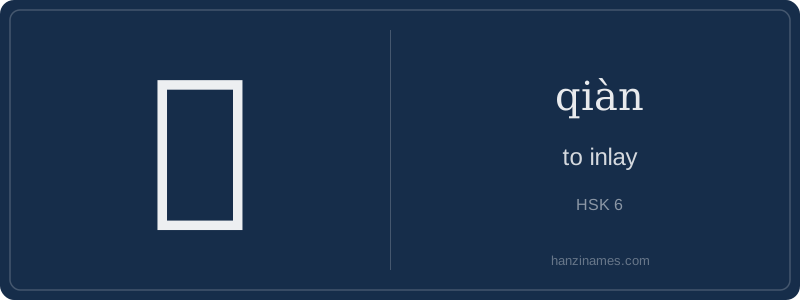
In daily life, 嵌 is commonly used in construction, electronics, and traditional crafts. For example, Chinese building codes specify '嵌入式安装' (qiànrùshì ānzhuāng) — 'recessed installation' — for outlets and lighting fixtures. In electronics, '嵌入式系统' (qiànrùshì xìtǒng) — 'embedded systems' — is a standard term taught in university engineering programs and used by companies like Huawei and DJI. The phrase 嵌字 (qiàn zì), meaning 'on-screen text overlay', is ubiquitous in TV production and livestreaming platforms like Douyin.
The character’s form is not pictographic but phono-semantic: 山 (shān, mountain) serves as the semantic radical, suggesting something fixed and enduring, while the right side (甘+欠) provides phonetic approximation to qiàn. Its earliest documented use appears in Song dynasty texts describing lacquerware techniques, and it remains unchanged in modern GB2312 and Unicode standards.
Imagine stepping into a centuries-old Suzhou garden, where sunlight glints off a lacquered screen inlaid with mother-of-pearl lotus blossoms. The artisan’s steady hand presses tiny fragments of shell into grooves carved into the wood — not glued, not nailed, but precisely *embedded* to become one with the surface. This is 嵌 (qiàn): a quiet act of integration, where foreign material is made inseparable from its host through skill and intention.
Unlike simple attachment, 嵌 implies structural harmony — the inlaid element must sit flush, align seamlessly, and endure without protruding or loosening. It appears in contexts ranging from Ming dynasty furniture to modern smartphone displays, where glass is *embedded* into aluminum frames. The character itself evokes this physical intimacy: its 山 (mountain) radical suggests solidity and foundation, while the 口 + 甘 component hints at containment and sweetness — as if the inlaid piece is both held and honored.
In contemporary usage, 嵌 carries subtle connotations of sophistication and craftsmanship. A 'well-embedded' design signals precision engineering; a 'poem embedded with classical allusions' reflects layered literary artistry. Even in digital interfaces, developers say 数据嵌入 (shùjù qiàn rù) — 'data embedding' — borrowing the character’s sense of seamless integration. Thus, 嵌 bridges ancient craft and modern technology, always signifying deliberate, invisible unity.
Example Sentences
Common Compounds
Similar Characters — Don't Mix These Up
Your First Step into Chinese Culture: Get a Chinese Name
Every journey into Chinese begins with a name. Use our free Chinese name generator to create a meaningful, personalized Chinese name that fits you perfectly.
Get My Chinese Name →