怯
Character Story & Explanation
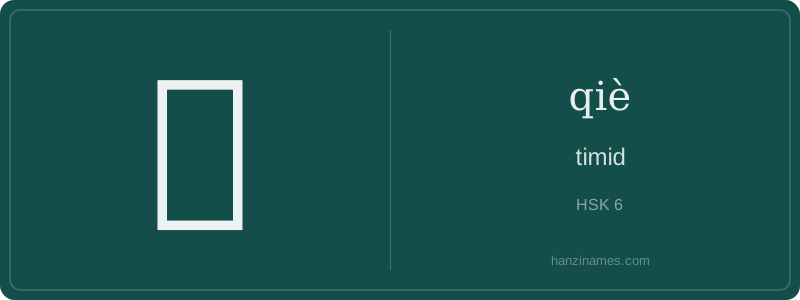
怯 appears frequently in classical and modern texts to describe psychological hesitation—especially in moral or performative contexts. It features in the idiom 怯声怯气 (qiè shēng qiè qì), meaning 'in a timid, faltering voice', widely used in literature and media to depict nervous characters. The HSK 6 exam includes it in reading passages about personal growth and social anxiety. Historically, it appears in Ming-Qing vernacular novels like The Plum in the Golden Vase, describing characters who withdraw under pressure.
As a semantic-phonetic compound, 怯 consists of the heart-mind radical 忄 (indicating emotion) and the phonetic component 去 (qù, 'to go'), though the sound has shifted from *kʰaʔ in Old Chinese to qiè today. No pictographic origin exists—it emerged in seal script (c. 3rd century BCE) as a standardized character for emotional reticence, not physical fear.
怯 (qiè) conveys a deep, culturally nuanced sense of timidity—not merely shyness, but a hesitant restraint rooted in self-doubt, social caution, or fear of judgment. Unlike English ‘shy’, which can carry neutral or even endearing connotations, 怯 often implies an internalized inhibition that hinders action, especially in high-stakes or hierarchical contexts like public speaking or challenging authority.
In Chinese psychology and education, 怯 is frequently linked to Confucian values of humility and deference—yet it’s also critiqued in modern pedagogy as a barrier to critical thinking and assertiveness. Western equivalents like ‘timid’ or ‘diffident’ come closest, but diffidence suggests intellectual modesty, while 怯 more often signals visceral nervousness or reluctance to engage.
Culturally, 怯 reflects a tension between collective harmony and individual expression. In contrast to Western individualism—where confidence is often valorized as authenticity—Chinese discourse may frame 怯 not as pathology, but as situational wisdom: knowing when silence or withdrawal preserves dignity or avoids conflict. This makes it richer—and more context-dependent—than simple translations suggest.
Example Sentences
Common Compounds
Similar Characters — Don't Mix These Up
Your First Step into Chinese Culture: Get a Chinese Name
Every journey into Chinese begins with a name. Use our free Chinese name generator to create a meaningful, personalized Chinese name that fits you perfectly.
Get My Chinese Name →