恩
Character Story & Explanation
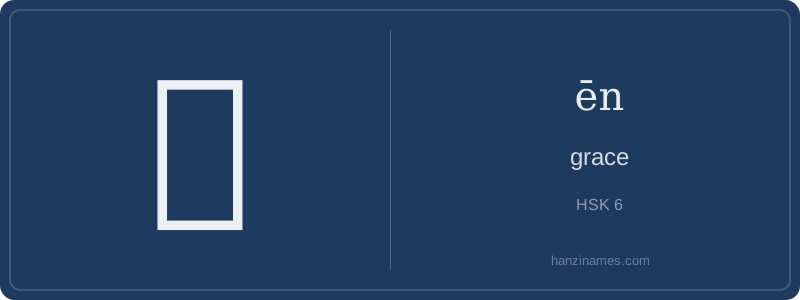
恩 is central to Confucian ethics and appears in classical texts like the *Book of Rites* (Lǐjì) and *Analects*, where repaying恩 (bào ēn) — returning kindness — is a core virtue. In modern usage, it appears in common phrases like 恩人 (ēn rén, 'benefactor'), 感恩节 (gǎn ēn jié, 'Thanksgiving Day'), and the idiom 恩重如山 (ēn zhòng rú shān, 'a favor as heavy as a mountain'). It’s also used formally in speeches, letters, and memorial inscriptions to honor lifelong mentors or saviors.
The character’s earliest documented form appears in seal script (c. 3rd century BCE), where the top part (因) suggests 'cause' or 'basis', and the bottom (心) shows 'heart' — together meaning 'kindness rooted in heartfelt intention'. While its oracle-bone origins are unattested, scholars agree the structure reflects an ethical idea: grace arises from sincere, internal motivation — not obligation.
Hi students! Today we’re learning the character 恩 (ēn), which means 'favor', 'grace', or 'kindness' — not just any kindness, but a deep, grateful kind of benevolence. It’s written with 10 strokes and belongs to the 心 (xīn, 'heart') radical, showing this concept lives in the heart — it’s emotional, personal, and morally weighty. You’ll see it often in formal or respectful contexts, like thanking elders or acknowledging someone’s life-changing help.
This character appears frequently in compound words and idioms, especially those tied to gratitude and moral duty. Unlike casual words for 'thanks' (like 谢谢), 恩 carries solemnity — think of repaying a debt of kindness (报恩, bào ēn). Its tone is level (first tone), so practice saying it clearly: ēn, like 'un' in 'under' but with a high, flat pitch.
At HSK Level 6, 恩 signals advanced cultural literacy. Native speakers use it to express profound indebtedness — for example, a student might say ‘老师对我的恩情我永远忘不了’ (My teacher’s grace toward me I’ll never forget). Notice how it pairs with words like 情 (qíng, 'feeling') or 德 (dé, 'virtue') to deepen emotional resonance. Mastering 恩 helps you speak and write with nuance and respect.
Example Sentences
Common Compounds
Similar Characters — Don't Mix These Up
Your First Step into Chinese Culture: Get a Chinese Name
Every journey into Chinese begins with a name. Use our free Chinese name generator to create a meaningful, personalized Chinese name that fits you perfectly.
Get My Chinese Name →