悦
Character Story & Explanation
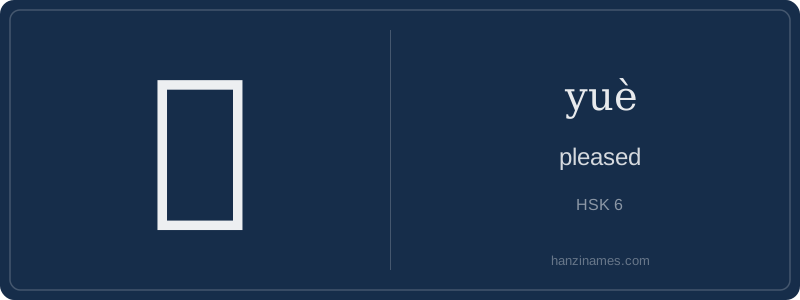
悦 is widely used in modern standard Chinese, especially in formal speech, education, and media. It appears in the fixed phrase 悦耳 (yuè’ěr, 'pleasing to the ear'), commonly describing soothing music or gentle voices — this collocation dates back to at least the Ming dynasty and remains highly frequent today. The character also features in the idiom 心悦诚服 (xīn yuè chéng fú, 'convinced from the heart'), documented in classical texts like the *Mencius*, signifying genuine, unforced agreement.
The character evolved from seal script; its right side 兌 (duì) originally meant 'to speak' or 'to exchange', later acquiring connotations of 'pleasure' through phonetic-semantic development. No pictographic origin exists — it’s a phono-semantic compound: 忄 (heart/emotion) + 兌 (sound hint and semantic contributor). Today, Chinese people use 悦 in contexts like teacher feedback ('你的进步令人欣慰' — though '欣慰' is more common — or in written praise: '老师看到你认真作业,十分悦然').
Hi students! Let’s explore 悦 (yuè), a beautiful character meaning 'pleased' or 'delighted'. It belongs to the 'heart-mind' family — notice the left-side radical 忄 (xīn zì páng), which signals emotions. Unlike simpler happiness words like 喜 (xǐ), 悦 carries a quieter, more refined joy — think of inner satisfaction after reading poetry or helping a friend. Its ten strokes flow gracefully, and mastering it helps you express nuanced feelings beyond basic 'happy'.
This character appears often in formal and literary contexts — not so much in casual texting, but very common in writing, speeches, and classical phrases. Because it’s HSK Level 6, it’s among the most advanced vocabulary for learners, reflecting emotional maturity in expression. Don’t confuse it with similar-sounding characters like 月 (yuè, 'moon') — context and radicals are your best friends!
Remember: 悦 isn’t about loud laughter, but gentle, heartfelt contentment. You’ll see it paired with words like 耳 (ear), 目 (eye), or 心 (heart) — all pointing to how joy touches our senses and spirit. Practice writing it slowly, stroke by stroke, and imagine each line expressing calm appreciation. With time, using 悦 will make your Chinese sound more elegant and sincere.
Example Sentences
Common Compounds
Similar Characters — Don't Mix These Up
Your First Step into Chinese Culture: Get a Chinese Name
Every journey into Chinese begins with a name. Use our free Chinese name generator to create a meaningful, personalized Chinese name that fits you perfectly.
Get My Chinese Name →