悼
Character Story & Explanation
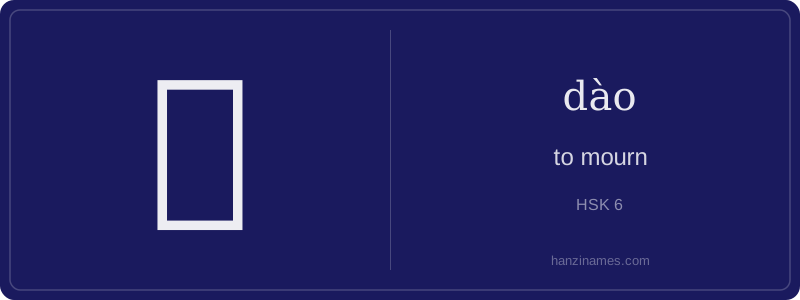
悼 is commonly used in formal commemorative settings: state media headlines (e.g., 悼念袁隆平院士), official funeral notices, tombstone inscriptions, and school ceremonies honoring revolutionary martyrs. The phrase 悼念 (dàoniàn, 'to commemorate') appears in over 120,000 official documents archived by China’s National Archives since 1949. It also features in the annual Qingming Festival public rituals and in standardized textbooks for middle-school moral education courses.
The character combines the heart/mind radical 忄 (indicating emotional interiority) with 卓 (zhuó, 'outstanding, lofty'), originally a phonetic component. According to the authoritative *Shuōwén Jiězì* (121 CE), 悼 was defined as 'grief arising from profound respect' — confirming its ancient association with reverent sorrow, not raw emotion. Its structure reflects moral elevation of mourning, not depiction of weeping or ritual objects.
悼 (dào) is a formal, solemn character meaning 'to mourn'—used primarily in written and ceremonial contexts rather than casual speech. It conveys deep, respectful sorrow for the deceased, often tied to official or literary expression. Unlike English ‘mourn’, which can be used reflexively (‘I mourn my father’), 悼 typically appears in passive or third-person constructions (e.g., 悼念烈士, 'commemorate fallen heroes'), reflecting Chinese cultural emphasis on collective remembrance over individual grief display.
In Chinese tradition, mourning is deeply ritualized and socially regulated; 悼 embodies this formality—appearing in state funerals, memorial inscriptions, and classical poetry. Its use signals gravity and propriety, not just emotion. Western equivalents like ‘lament’ or ‘mourn’ carry similar weight but lack the institutional resonance: in English, one might ‘mourn’ privately; in Chinese, one 悼s publicly, ritually, and often collectively—e.g., national days of mourning declared by the government.
Culturally, 悼 aligns with Confucian values of filial piety (孝) and reverence for ancestors, where mourning is an ethical duty, not merely psychological response. This contrasts with some Western frameworks that prioritize personal healing or therapeutic expression. While ‘grief counseling’ exists in China today, the word 悼 remains reserved for dignified, socially sanctioned acts—never for self-help contexts or informal loss (e.g., a pet). Its HSK-6 status reflects its specialized, high-register usage, not frequency in daily conversation.
Example Sentences
Common Compounds
Similar Characters — Don't Mix These Up
Your First Step into Chinese Culture: Get a Chinese Name
Every journey into Chinese begins with a name. Use our free Chinese name generator to create a meaningful, personalized Chinese name that fits you perfectly.
Get My Chinese Name →