抹
Character Story & Explanation
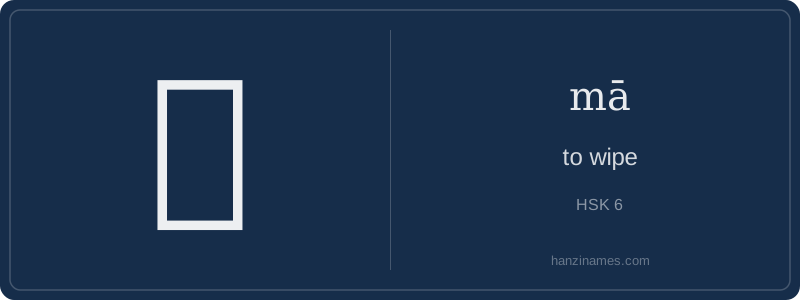
抹 is widely used across modern Chinese life: workers 抹水泥 (mǒ shuǐní) 'apply cement'; mothers 抹药 (mǒ yào) 'apply ointment' on children’s scrapes; artists 抹颜料 (mǒ yánliào) 'apply paint'; and editors 抹掉错字 (mǒ diào cuòzì) 'erase typos'. A famous idiom is 抹煞 (mǒshā) — 'to obliterate (achievements or facts)', often used in historical or political discourse to critique distortion of truth. The phrase 抹不开面子 (mǒ bù kāi miànzi) — 'unable to brush aside face/embarrassment' — captures cultural sensitivity around social dignity.
The character evolved from seal script, where 扌 (hand) + 末 (mò, 'tip/end') suggested 'using the hand to apply or remove at the surface’. Though not a pictograph, its structure reflects functional logic: hand action directed toward a boundary or surface—emphasizing control over interfaces between self and world, inner and outer, visible and hidden.
At first glance, 抹 (mā) means 'to wipe'—a simple physical act. Yet in Chinese worldview, wiping is never merely mechanical; it embodies intentionality, care, and quiet transformation. Whether erasing a chalkboard or smoothing plaster on a wall, the gesture implies restoration, concealment, or preparation—reflecting Confucian values of order, humility, and unseen labor. The hand radical 扌 underscores human agency: knowledge isn’t passively received but actively shaped, cleansed, and refined.
This character reveals how Chinese language encodes philosophy in motion. Its three pronunciations—mā (casual wiping), mǒ (applying pigment or emotion), and mò (erasing completely)—map onto a spectrum of human intervention: from gentle maintenance to artistic expression to decisive removal. Such polysemy mirrors Daoist acceptance of multiple truths coexisting within one form—like water that wipes, coats, and dissolves, depending on context and will.
In daily life, 抹 bridges the material and metaphysical: wiping sweat off a brow after hard work honors diligence;抹去 (mǒqù) ‘to wipe away’ grief or shame carries therapeutic weight; even 抹黑 (mǒhēi) ‘to smear’ someone’s reputation reflects how moral integrity is imagined as a surface—visible, vulnerable, and subject to deliberate alteration. Thus, 抹 is not just an action—it’s an ethical verb, revealing how Chinese culture treats perception, memory, and identity as surfaces to be tended, not fixed truths.
Example Sentences
Common Compounds
Similar Characters — Don't Mix These Up
Your First Step into Chinese Culture: Get a Chinese Name
Every journey into Chinese begins with a name. Use our free Chinese name generator to create a meaningful, personalized Chinese name that fits you perfectly.
Get My Chinese Name →