挖
Character Story & Explanation
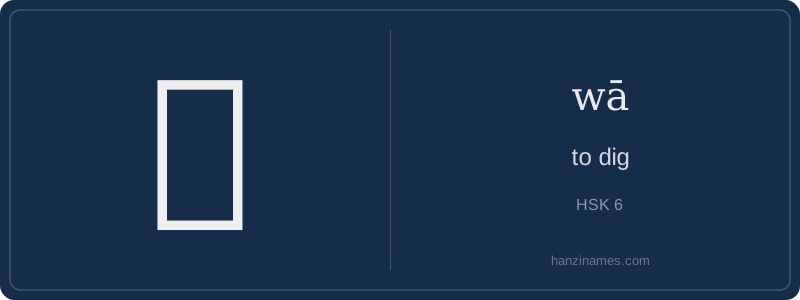
In modern Chinese, 挖 is widely used in construction (挖地基 wā dìjī, 'dig foundations'), agriculture (挖土豆 wā tǔdòu, 'dig up potatoes'), and figurative contexts like talent acquisition (挖人 wā rén, 'poach personnel')—a documented practice since China’s 1990s SOE reforms. It appears in the idiom 挖空心思 (wā kōng xīnsī, 'dig out one’s heart-mind'), meaning 'to rack one’s brains', attested in 20th-century literature including Lu Xun’s essays.
The character is not pictographic—it evolved from seal script around the Qin-Han transition. Its structure is semantic-phonetic: 扌 (hand action) + 穴 (cavity, indicating meaning and approximating pronunciation). No oracle bone or bronze inscription form exists; earliest verified appearance is in Han-era bamboo texts describing land reclamation.
As an archaeologist brushing dust from a Han dynasty bamboo slip, I find 挖 etched not in oracle-bone script—where it doesn’t appear—but in later clerical inscriptions where manual labor met language. Its 扌 (hand) radical reveals intentionality: this is no passive erosion, but purposeful excavation—shovels biting earth, fingers prying secrets from soil. The right side, 穴 (xué, 'cavity'), signals the goal: hollowing out space, whether in ground, memory, or data.
By the Tang dynasty, 挖 expanded beyond physical digging—farmers dug wells, soldiers dug trenches, and poets ‘dug’ for rare words. In Ming-Qing vernacular fiction, it appears in phrases like 挖墙脚 (wā qiáng jiǎo, 'dig under the wall’s foot'), metaphorically undermining someone’s foundation—a linguistic stratigraphy showing how labor verbs fossilize into social critique.
Today’s digital layer adds new sediment: tech writers use 挖角 (wā jiǎo, 'dig corners') for poaching talent, and analysts speak of 挖掘数据 (wājué shùjù, 'excavate data'). Each usage retains the core kinetic energy—the hand-in-motion, the deliberate breach of surface to access what lies beneath. This character isn’t static; it’s a living trench, deepening with every era’s needs.
Example Sentences
Common Compounds
Similar Characters — Don't Mix These Up
Your First Step into Chinese Culture: Get a Chinese Name
Every journey into Chinese begins with a name. Use our free Chinese name generator to create a meaningful, personalized Chinese name that fits you perfectly.
Get My Chinese Name →