搏
Character Story & Explanation
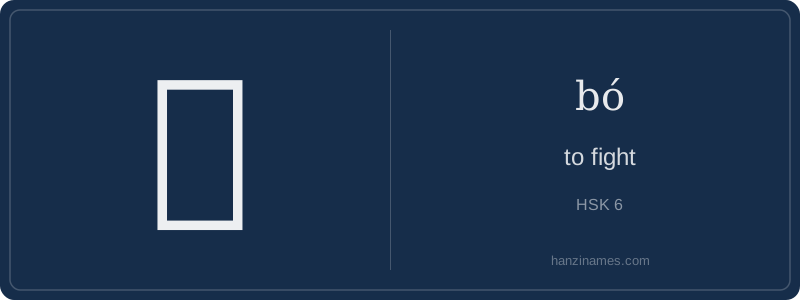
搏 is widely used in modern Chinese in competitive and aspirational contexts: sports commentary (搏杀赛场), motivational slogans (拼搏精神), and idioms like 搏击风浪 (‘to battle storms and waves’, meaning ‘to brave adversity’). It appears in the official motto of China’s national sports policy and in news reports on scientific breakthroughs—e.g., ‘scientists battled to develop the vaccine’ (科研人员奋力搏战).
The character evolved from seal script (c. 3rd century BCE), where 扌 (hand) + 博 (bó, ‘to gamble’ or ‘extensive’) formed a semantic-phonetic compound. Though 博 originally suggested risk and breadth, by Han dynasty texts, 搏 consistently meant ‘to seize, grapple, or contend physically’. Its form has remained stable since clerical script—no oracle-bone origin; its documented use begins in Warring States bamboo slips describing martial contests.
搏 (bó) embodies a distinctly Chinese conception of struggle—not as blind aggression, but as disciplined, purposeful engagement with challenge. Rooted in the hand radical 扌, it emphasizes agency and physical or mental exertion: one *uses the hands* to grapple, compete, or strive. This reflects Confucian and Daoist values where effort is virtuous only when aligned with righteousness (义) or natural flow (道), not mere domination.
In classical texts, 搏 appears in contexts of martial skill, scholarly debate, and even cosmic balance—such as wrestling with fate (搏命) or contending for moral truth (搏辩). Unlike Western ‘fight’ connoting opposition, 搏 often implies dynamic tension toward transformation: two forces meeting not to destroy, but to clarify, refine, or transcend.
The character’s cultural weight deepens in modern usage: athletes ‘strive for excellence’ (拼搏), entrepreneurs ‘battle market uncertainty’ (搏击风浪), and students ‘fight for admission’ (搏一个名额). Here, 搏 carries quiet dignity—it’s never reckless, but always intentional, resilient, and human-centered. It reveals a worldview where struggle is not the opposite of harmony, but its necessary condition.
Example Sentences
Common Compounds
Similar Characters — Don't Mix These Up
Your First Step into Chinese Culture: Get a Chinese Name
Every journey into Chinese begins with a name. Use our free Chinese name generator to create a meaningful, personalized Chinese name that fits you perfectly.
Get My Chinese Name →