挠
Character Story & Explanation
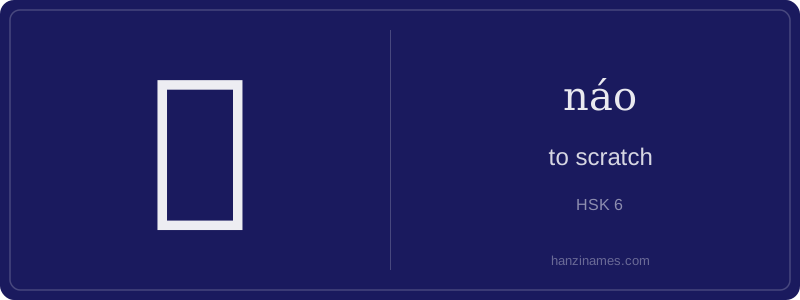
挠 is commonly used in modern Mandarin in idiomatic and expressive phrases rather than literal scratching. For example, 挠头 (náotóu) — literally 'scratch head' — is widely used across media and conversation to mean 'to be stumped' or 'at a loss'. Another well-documented phrase is 百折不挠 (bǎi zhé bù náo), a classical idiom meaning 'unyielding after countless setbacks', found in official speeches and textbooks since the early 20th century. It's also used in medical contexts (e.g., 皮肤瘙痒需避免挠抓) advising patients not to scratch itchy skin.
The character’s form is not pictographic — its right component 尧 (yáo) is primarily phonetic, borrowed from the ancient personal name 尧 (legendary emperor Yao). No oracle bone or bronze script forms of 挠 survive; it first appears in seal script during the Qin dynasty (3rd c. BCE) as a phono-semantic compound. Today, Chinese speakers most often encounter it in written idioms or health advice — not in isolation.
Hi students! Let’s learn 挠 (náo), a Level 6 HSK character with 9 strokes and the hand radical 扌 — which tells us it’s an action done with the hand. Its core meaning is 'to scratch', like scratching an itch or a surface. Though simple in concept, it appears more often in abstract or literary contexts than in everyday casual speech — for example, when describing mental discomfort ('scratching at one’s nerves') or resisting pressure ('not yielding').
Don’t confuse 挠 with similar-looking characters: it’s not about grabbing (抓) or pushing (推), but specifically about light, repeated friction — whether physical (scratching skin) or metaphorical (a nagging doubt that ‘scratches’ at your confidence). The left-hand side (扌) anchors it as bodily action; the right side (尧) is a phonetic component hinting at pronunciation (náo).
As you practice writing, remember the stroke order: start with the hand radical (three strokes: horizontal, vertical, lift), then build the right part carefully — especially the distinctive 'X' shape inside 尧. This character rarely stands alone; it’s almost always part of compounds like 挠头 (náotóu, 'to scratch one’s head' — meaning to be puzzled) or 不挠 (bùnáo, 'unyielding'). Mastering it unlocks nuanced expressions of resistance, hesitation, and physical sensation.
Example Sentences
Common Compounds
Similar Characters — Don't Mix These Up
Your First Step into Chinese Culture: Get a Chinese Name
Every journey into Chinese begins with a name. Use our free Chinese name generator to create a meaningful, personalized Chinese name that fits you perfectly.
Get My Chinese Name →