晤
Character Story & Explanation
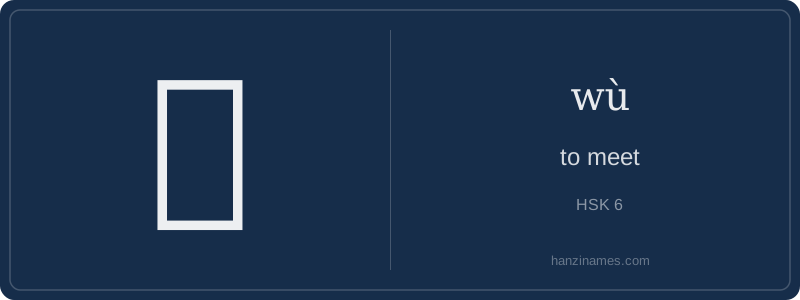
In modern Chinese usage, 晤 is overwhelmingly found in formal written contexts: official announcements (e.g., ‘两国领导人晤谈’), academic schedules (‘与导师晤面时间’), and business correspondence. It rarely appears in spoken daily conversation — native speakers usually say 见 or 会 instead. A well-documented phrase is 面晤 (miàn wù), meaning ‘in-person meeting’, commonly used in legal and administrative documents since the Republican era (1912–1949). The term also appears in historical records of diplomatic exchanges, such as the 1972 Nixon–Zhou Enlai meetings, where official communiqués used 晤 to denote solemn, agenda-driven dialogue.
The character’s structure reflects its meaning: the 日 (rì, ‘sun/day’) radical suggests clarity and presence — as if the meeting occurs in full light, openly and deliberately; the right side, 吾 (wú), is a phonetic component meaning ‘I/myself’, implying mutual, direct engagement. While not a pictograph, its composition reinforces the idea of two parties coming together with awareness and intention — a documented semantic logic confirmed by the *Shuōwén Jiězì* (100 CE).
Imagine stepping into a quiet, wood-paneled meeting room in Beijing’s Zhongguancun tech district. A senior engineer from Shanghai and a venture capitalist from Shenzhen sit across from each other, laptops closed, tea steaming between them. As they begin their first face-to-face discussion after months of emails, the host says warmly: ‘今天能晤面,非常荣幸。’ — ‘It’s truly an honor to meet you in person today.’ Here, 晤 isn’t just ‘to meet’ — it conveys intentionality, respect, and the significance of a planned, substantive encounter.
This character carries a formal, almost ceremonial weight. Unlike casual terms like 见 (jiàn) or 遇 (yù), 晤 implies purposeful, often professional or scholarly interaction — think academic conferences, diplomatic briefings, or high-level business negotiations. Its use signals that this isn’t a chance encounter but a deliberate convergence of minds and agendas, rooted in Chinese cultural values of ritualized respect and relational intentionality.
Historically, 晤 appears frequently in classical texts like the *Book of Rites* (《礼记》) and Tang dynasty poetry, where it describes meetings between scholars, officials, or mentors and disciples. Even today, official government notices, university bulletins, and corporate press releases prefer 晤 over simpler synonyms when announcing scheduled high-stakes dialogues — reinforcing its status as the lexical gold standard for dignified, pre-arranged meetings.
Example Sentences
Common Compounds
Similar Characters — Don't Mix These Up
Your First Step into Chinese Culture: Get a Chinese Name
Every journey into Chinese begins with a name. Use our free Chinese name generator to create a meaningful, personalized Chinese name that fits you perfectly.
Get My Chinese Name →