枕
Character Story & Explanation
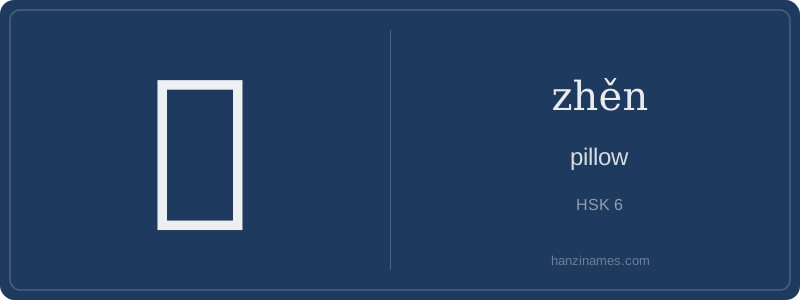
In contemporary China, 枕 is most commonly seen in compound words like 枕头 (zhěntou, 'pillow'), 枕巾 (zhěnjīn, 'pillowcase'), and medical terms such as 颈椎枕 (jǐngzhuī zhěn, 'cervical pillow'). It appears in the idiom 枕石漱流 (zhěn shí shù liú), meaning 'to live in reclusion, resting on stones and rinsing mouth with streams'—a phrase from the Jin dynasty text Shishuo Xinyu, symbolizing scholarly detachment from worldly affairs.
The character’s structure is not pictographic but phono-semantic: 木 (wood) signals material category, while 沈 (shěn, 'to sink/submerge') serves as the phonetic component—though pronunciation diverged over time (shěn → zhěn). Historically, hard pillows—including jade, ceramic, and lacquered wood—were standard before Song-dynasty softening trends, making the 木 radical historically accurate and culturally grounded.
The character 枕 (zhěn) literally means 'pillow'—a humble yet essential object in daily life and traditional Chinese culture. Its radical 木 (wood) reflects historical pillow materials: early pillows were often carved from wood, bamboo, or porcelain, especially among scholars and elites. This contrasts with soft Western pillows, highlighting how material culture shaped the character’s form and function.
As an HSK Level 6 character, 枕 appears in refined contexts—not just physical objects but metaphors for rest, vulnerability, or intimacy. You’ll find it in classical poetry (e.g., Du Fu’s lines about leaning on a pillow while grieving), medical texts (neck-supporting pillows), and modern idioms like 枕戈待旦 ('sleep with spear as pillow', meaning 'be ever-ready').
Though seemingly simple, 枕 carries layered resonance: it evokes quiet moments—reading in bed, recovering from illness, or even ritual use (e.g., funeral pillows in some regional customs). Its eight-stroke structure balances symmetry and flow: the left 木 radical grounds it, while the right 沈 (shěn, 'to sink') hints at the gentle settling of the head onto support—a subtle visual metaphor embedded in script.
Example Sentences
Common Compounds
Similar Characters — Don't Mix These Up
Your First Step into Chinese Culture: Get a Chinese Name
Every journey into Chinese begins with a name. Use our free Chinese name generator to create a meaningful, personalized Chinese name that fits you perfectly.
Get My Chinese Name →