棍
Character Story & Explanation
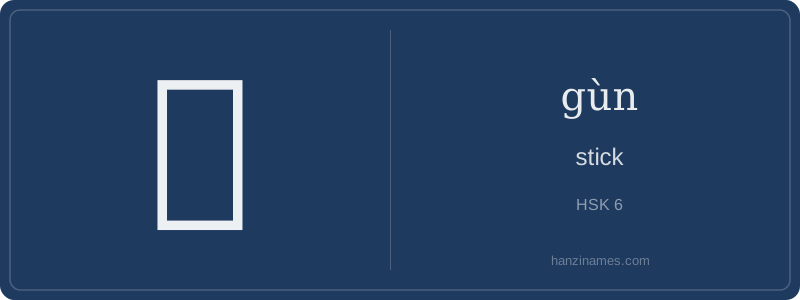
In daily life, 棍 is widely used: parents say ‘别用棍打孩子’ (Don’t hit children with a stick); martial artists train with 齐眉棍 (qíméi gùn, ‘eyebrow-level staff’); and police in China carry 警棍 (jǐnggùn, ‘police truncheon’). The idiom ‘一棍子打死’ (yī gùnzi dǎ sǐ, ‘to kill with one blow’) metaphorically means ‘to dismiss something entirely without fair consideration’ — a common phrase in media and political commentary.
The character is not pictographic; it first appeared in seal script (c. 3rd century BCE) as a phono-semantic compound. Its modern form reflects standardization under the Qin dynasty. No oracle bone form exists — it’s a later creation for a practical tool, not an ancient ritual object.
Hi students! Let’s look at the character 棍 (gùn). It means 'stick', 'rod', or 'truncheon' — a simple, solid object made of wood or other material. You’ll notice its left side is 木 (mù), the ‘tree’ or ‘wood’ radical — telling us right away this object is traditionally wooden. That makes sense: most early sticks and rods were carved from wood.
The right side is 昆 (kūn), which here serves as a phonetic component — it gives a clue to pronunciation (gùn sounds close to kūn in ancient Chinese, and still shares tone and consonant shape). Don’t worry about memorizing historical sound shifts yet; just know that many characters use such 'sound hints'. This structure (radical + phonetic) appears in over 80% of Chinese characters!
Although 棍 looks straightforward, it carries weight beyond literal meaning. In martial arts, literature, and even police work, it implies authority, discipline, or force — but not necessarily violence. Think of it like a conductor’s baton: small, wooden, yet full of purpose. At HSK Level 6, you’ll meet it in formal texts, idioms, and technical contexts — so mastering it helps unlock richer Chinese expression.
Example Sentences
Common Compounds
Similar Characters — Don't Mix These Up
Your First Step into Chinese Culture: Get a Chinese Name
Every journey into Chinese begins with a name. Use our free Chinese name generator to create a meaningful, personalized Chinese name that fits you perfectly.
Get My Chinese Name →