渔
Character Story & Explanation
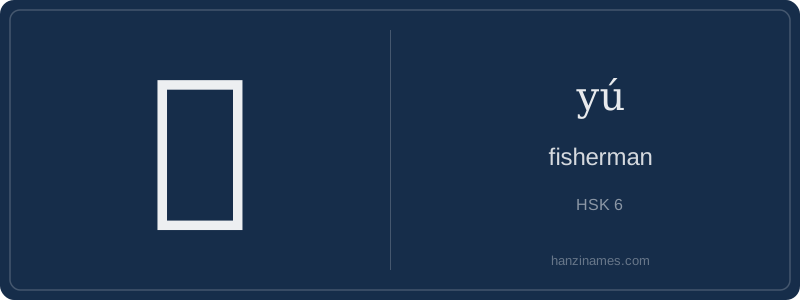
渔 is commonly used in modern contexts like fisheries management (渔业管理), marine policy, and cultural heritage preservation. It appears in official terms such as 渔业资源 (yúyè zīyuán, 'fishery resources') and the nationally enforced 渔业法 (Yúyè Fǎ, 'Fisheries Law' of 1986, revised 2023). A well-known idiom is 涸泽而渔 (hé zé ér yú)—'draining the pond to catch all fish'—cited in the *Huáinánzǐ* (2nd c. BCE) to warn against short-term exploitation.
The character evolved from the ancient form 漁, with 氵 (water radical) and 魚 (fish) as semantic-phonetic components. Though not a pictograph, its structure visually anchors meaning: water + fish = the act of fishing. Today, Chinese people see 渔 in news headlines about coastal revitalization projects or eco-tourism villages rebranding as ‘traditional fishing towns’ (渔村).
The character 渔 (yú) embodies the deep-rooted Chinese reverence for harmony between humanity and nature. Unlike Western notions of conquest over resources, 渔 reflects a relational worldview: the fisherman does not dominate the river but reads its rhythms—tides, seasons, currents—as a partner in sustenance. This aligns with Daoist and Confucian ideals where ethical livelihood arises from attunement, not extraction.
Historically, fishing communities along the Yangtze, Pearl River, and coastal provinces were vital yet often marginalized stewards of aquatic ecosystems. The character appears in classical texts like the *Book of Songs* (Shījīng), where ‘渔’ evokes quiet diligence—not profit-driven labor, but rhythmic, seasonal work embedded in communal ethics and ecological awareness.
In modern China, 渔 carries layered resonance: it signifies traditional livelihoods now threatened by overfishing and pollution, yet also inspires conservation efforts like the Yangtze’s decade-long fishing ban (2020–2030). Thus, 渔 is not merely occupational—it’s a cultural litmus test for sustainability, intergenerational responsibility, and the enduring Confucian ideal of ‘righteous livelihood’ (义利之辨).
Example Sentences
Common Compounds
Similar Characters — Don't Mix These Up
Your First Step into Chinese Culture: Get a Chinese Name
Every journey into Chinese begins with a name. Use our free Chinese name generator to create a meaningful, personalized Chinese name that fits you perfectly.
Get My Chinese Name →