洁
Character Story & Explanation
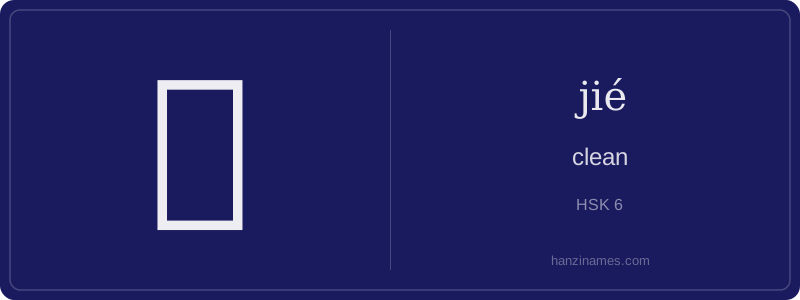
洁 is widely used in modern Chinese life—from public health campaigns ('爱国卫生运动', Patriotic Health Campaign) to corporate slogans ('洁净科技', Clean-Tech Innovation). It appears in the national standard GB/T 34012–2017 on 'Hygiene Management in Public Places' and is central to the phrase '洁身自好' (jiéshēn zìhào), meaning 'to maintain personal integrity,' frequently cited in anti-corruption discourse since the 2010s.
The character first appeared in seal script (c. 3rd century BCE), combining 氵 (water) and 吉 (jí, 'auspicious'). While 吉 originally denoted ritual divination tools, its phonetic role here is well-documented in Shuōwén Jiězì (121 CE). No oracle-bone form survives, but its structure consistently signals 'water + auspiciousness'—a semantic-phonetic compound affirming that purity brings blessing.
At its core, 洁 (jié) embodies more than physical cleanliness—it reflects a Confucian- and Daoist-infused ideal of moral purity and inner clarity. In classical Chinese thought, cleanliness was never merely hygienic; it was a prerequisite for ritual sincerity, scholarly integrity, and harmonious social conduct. The character appears in texts like the Book of Rites, where ‘洁身’ (jiéshēn, 'to keep one’s body clean') symbolized ethical self-discipline and resistance to corruption.
This worldview links outer order with inner virtue: a tidy study implies disciplined thinking; an uncluttered heart invites wisdom. Unlike Western dichotomies that separate ‘clean’ from ‘spiritual’, 洁 collapses them—making purity both tangible and transcendent. Even today, calling someone ‘高洁’ (gāojié, 'loftily pure') praises not just their honesty but their unwavering moral posture amid societal pressures.
Thus, 洁 functions as a quiet ethical compass—measuring personal conduct against an aesthetic of restraint and authenticity. Its water radical (氵) subtly reinforces this: water flows, adapts, yet remains inherently clear unless disturbed—a metaphor for human nature in Neo-Confucian philosophy. To cultivate 洁 is not to achieve perfection, but to practice continual, humble refinement—like rinsing dust from a mirror, again and again.
Example Sentences
Common Compounds
Similar Characters — Don't Mix These Up
Your First Step into Chinese Culture: Get a Chinese Name
Every journey into Chinese begins with a name. Use our free Chinese name generator to create a meaningful, personalized Chinese name that fits you perfectly.
Get My Chinese Name →