畴
Character Story & Explanation
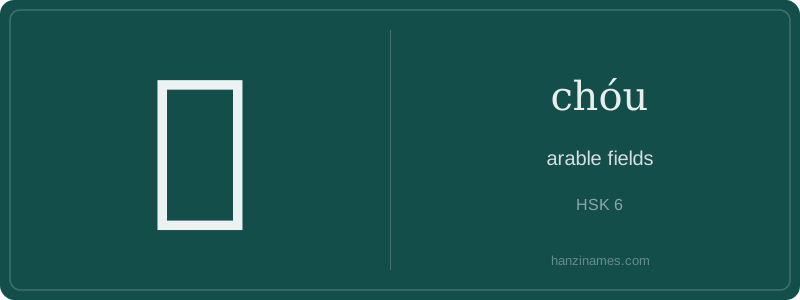
畴 is rarely used alone in modern speech but appears in formal, literary, or policy contexts—especially in terms like 耕畴 (gēng chóu, 'cultivated fields') and 疆畴 (jiāng chóu, 'territory' or 'domain'). It features in the classical idiom ‘畴昔’ (chóu xī), meaning 'formerly' or 'in bygone days', evoking nostalgic reflection on ancestral lands and time-honored ways. Historically, it appeared in Han dynasty land registers and Tang legal codes concerning field allocation.
The character’s form is not pictographic but phono-semantic: 田 (tián, 'field') is the semantic radical indicating meaning; 寿 (shòu, 'longevity') serves as the phonetic component (though pronunciation shifted from *shòu* to *chóu* over time). No oracle bone or bronze script forms survive—its earliest attested use is in Warring States bamboo texts.
畴 (chóu) embodies the ancient Chinese reverence for cultivated land—not as mere soil, but as the sacred interface between heaven, human labor, and ancestral continuity. Its radical 田 (field) anchors it in agrarian cosmology, where orderly plowing mirrored cosmic harmony. In classical texts like the *Book of Documents*, 畴 denotes designated, ritually surveyed farmland—land measured, allocated, and morally stewarded.
This character reflects a worldview where geography is ethics: fertile fields demand care, boundaries require justice, and harvests validate virtue. Unlike generic 'land', 畴 implies intentionality—fields prepared with purpose, often linked to state administration and Confucian ideals of benevolent governance rooted in rural stability.
Even today, 畴 carries quiet gravitas—it appears in formal discourse on land reform, ecological agriculture, and cultural heritage preservation. Its persistence signals how deeply China’s philosophical identity remains tilled in the soil: not passive terrain, but a moral covenant between people, past, and place—where every furrow bears the weight of history and hope.
Example Sentences
Common Compounds
Similar Characters — Don't Mix These Up
Your First Step into Chinese Culture: Get a Chinese Name
Every journey into Chinese begins with a name. Use our free Chinese name generator to create a meaningful, personalized Chinese name that fits you perfectly.
Get My Chinese Name →