盛
Character Story & Explanation
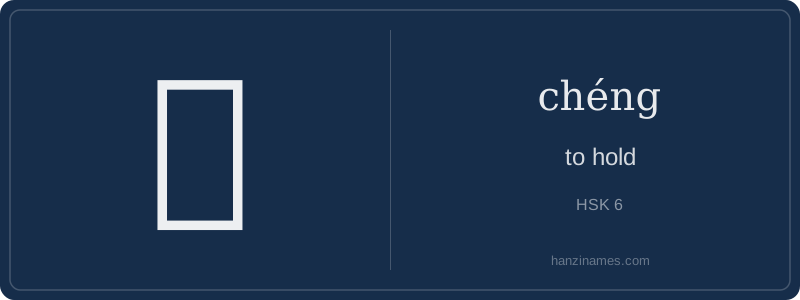
In modern Chinese, 盛 (chéng) appears daily in kitchen verbs: ‘盛饭’ (chéng fàn, ‘to serve rice’) is one of the first cooking phrases children learn—and a staple in family meals across China. It’s also central in formal idioms like ‘盛情难却’ (shèng qíng nán què, ‘one cannot refuse such heartfelt hospitality’), where shèng conveys abundance of feeling. Historically, the character appears in bronze inscriptions from the Western Zhou dynasty (c. 1046–771 BCE) denoting ritual vessels used to hold sacrificial wine or grain.
The character’s form is a clear pictograph: 皿 (radical) depicts a shallow dish with legs, and the top component 成 (chéng, ‘to complete’) was added later as a phonetic loan. No oracle bone version survives, but early bronze script shows a vessel with contents inside—confirming its original function as ‘to hold’.
Imagine stepping into a bustling Beijing teahouse at dawn—steam rises from porcelain cups as the master pours boiling water into a Yixing clay pot. He uses a small ceramic ladle to shèng (scoop) hot water, then pauses to chéng (hold) the tea leaves in a tiny gaiwan before rinsing them. Here, 盛 embodies quiet precision: not just containment, but intentional, respectful holding—of liquid, tradition, and moment.
This dual pronunciation reflects ancient functional duality: chéng is the verb ‘to hold’ (as in a vessel receiving content), while shèng evolved into an adjective meaning ‘flourishing’ or ‘grand’—a semantic shift from ‘full vessel’ → ‘abundant state’. In classical texts like the Book of Rites, 盛 appears in ritual contexts describing ceremonial vessels ‘holding’ offerings, anchoring its core meaning in material and symbolic containment.
Today, learners often stumble over the tone split—but native speakers navigate it effortlessly through context. When you hear chéng, think hands cradling; when you hear shèng, think banners unfurled. The radical 皿 (‘dish/vessel’) visually grounds both readings: every stroke—from the top horizontal to the final dot—reinforces the idea of a container with open mouth and solid base, unchanged for over two millennia in seal script.
Example Sentences
Common Compounds
Similar Characters — Don't Mix These Up
Your First Step into Chinese Culture: Get a Chinese Name
Every journey into Chinese begins with a name. Use our free Chinese name generator to create a meaningful, personalized Chinese name that fits you perfectly.
Get My Chinese Name →