盗
Character Story & Explanation
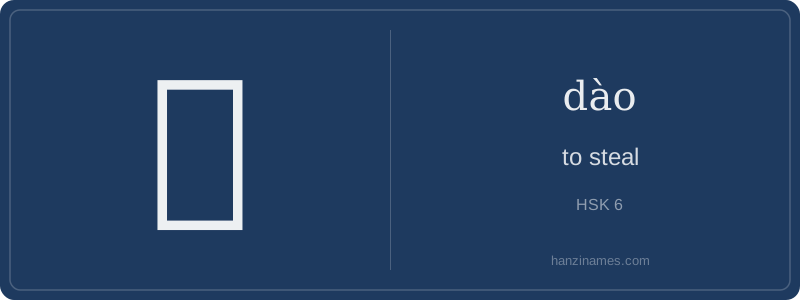
In contemporary China, 盗 appears ubiquitously in public discourse: subway announcements warn against 盗窃 (dàoqiè), anti-piracy campaigns target 盗版软件 (dàobǎn ruǎnjiàn, 'pirated software'), and police reports cite 盗车案 (dào chē àn, 'motor vehicle theft cases'). The idiom 嫖娼盗赌 (piáochāng dào dǔ)—referring to the 'four vices' (prostitution, gambling, theft, and drug use)—has been used since the early PRC era in official crime-prevention rhetoric. Historical records from the Tang Code (7th century CE) list 盗 as one of the 'Ten Abominations', carrying severe penalties for stealing imperial property.
The character’s earliest attested form appears in seal script (c. 3rd century BCE), where it combines 次 (cì, 'next') and 皿 (mǐn, 'vessel'). While not a pictograph, its composition reflects conceptual logic: 'deviation (次) from rightful possession (皿)'. No oracle bone form survives, but its consistent structure across Qin bamboo slips and Han inscriptions confirms its early association with illicit taking of goods.
The character 盗 (dào) embodies the act of unlawful appropriation—stealing—not just objects, but also intangible things like data, credit, or intellectual property. Its 11 strokes form a compact yet tense structure: the upper part ‘次’ (cì, originally meaning 'secondary' or 'next') suggests deviation from proper order, while the lower radical 皿 (mǐn, 'dish' or 'vessel') historically represented containers—items that could be taken without consent. This visual logic reflects ancient Chinese legal thought: theft disrupts social harmony by violating possession and trust.
At HSK Level 6, 盗 appears in advanced vocabulary related to crime, cybersecurity, and ethics. It’s rarely used alone in modern speech; instead, it thrives in compounds like 盗窃 (dàoqiè, 'theft') and 盗版 (dàobǎn, 'pirated copy'). Unlike colloquial terms like 偷 (tōu), which is more general and neutral-sounding, 盗 carries formal, often negative or literary weight—appearing in news headlines, court documents, and moral essays.
Its radical 皿 (‘vessel’) is key: though seemingly unrelated to stealing, it anchors the character in material culture—ancient bronze vessels were high-value ritual objects frequently looted during dynastic upheavals. Thus, 盗 subtly evokes historical patterns of cultural plunder, linking linguistic form to China’s documented experiences with tomb raiding, artifact smuggling, and digital piracy today. This layered resonance makes it both precise and culturally resonant.
Example Sentences
Common Compounds
Similar Characters — Don't Mix These Up
Your First Step into Chinese Culture: Get a Chinese Name
Every journey into Chinese begins with a name. Use our free Chinese name generator to create a meaningful, personalized Chinese name that fits you perfectly.
Get My Chinese Name →