盟
Character Story & Explanation
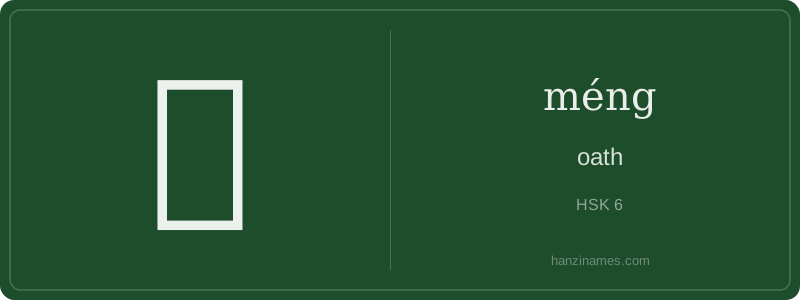
Historically, 盟 appears frequently in classical texts like the *Zuo Zhuan* (4th c. BCE), documenting feudal lords forming binding alliances — often sealed by sacrificing animals and drinking blood-mixed wine from ritual vessels (hence the 皿 radical). Today, it’s used formally: China’s 'Alliance of Universities' is called 大学联盟 (dàxué liánméng), and media report on NATO as 北约 (Běiyuē) — short for 北大西洋公约组织, where 公约 includes 约 (yuē, 'covenant'), closely related to 盟.
The character’s seal script form already showed 皿 (vessel) + 明 (míng, 'bright') — scholars believe 明 here was phonetic, not semantic. No oracle-bone form survives, but bronze inscriptions confirm its use in Zhou-dynasty oath rituals. In modern life, Chinese people encounter 盟 most often in news headlines about international coalitions or university partnerships — never in casual speech.
Hi students! The character 盟 (méng) means 'oath' or 'alliance' — think of a solemn promise made between people or groups. It’s not just any agreement; it carries weight, like signing a treaty or pledging loyalty. Though it looks complex with 13 strokes, notice the radical 皿 (mǐn) at the bottom — this is the 'dish' or 'vessel' radical, reminding us that ancient oaths were often sealed with shared wine poured into ritual vessels. That visual link helps anchor its meaning.
Don’t confuse 盟 with everyday words for 'promise' like 承诺 (chéngnuò). 盟 is formal, historical, and political — you’ll see it in diplomacy, history textbooks, and formal organizations. It appears in compound words like 同盟 (tóngméng, 'alliance') and 盟约 (méngyuē, 'covenant'). Its tone is second (rising), so practice saying 'méng' clearly — like 'mung' with a gentle upward lift.
This character is HSK Level 6, meaning it’s among the most advanced vocabulary — but don’t be intimidated! Understanding 盟 opens doors to reading Chinese news about international relations, historical dramas, or even classic literature like *Romance of the Three Kingdoms*, where sworn brotherhoods ('blood oaths') are central. Mastering it shows deep cultural literacy, not just language skill.
Example Sentences
Common Compounds
Similar Characters — Don't Mix These Up
Your First Step into Chinese Culture: Get a Chinese Name
Every journey into Chinese begins with a name. Use our free Chinese name generator to create a meaningful, personalized Chinese name that fits you perfectly.
Get My Chinese Name →