盲
Character Story & Explanation
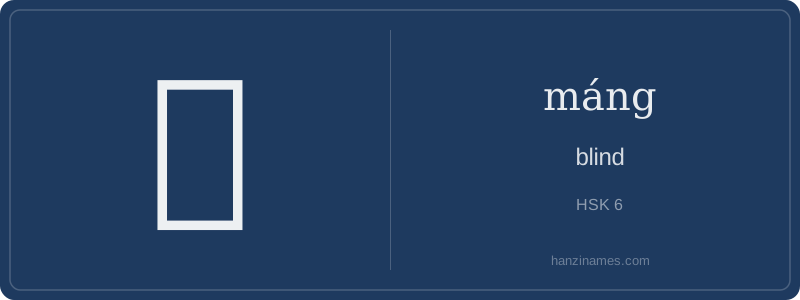
盲 is widely used in modern China’s accessibility infrastructure: '盲道' (tactile ground indicators) appear on sidewalks nationwide, and '盲文' (braille) is standardized in textbooks and public signage per national regulations (GB/T 20531–2006). The idiom 盲人摸象 (máng rén mō xiàng, 'blind men touching an elephant') — a well-documented Buddhist parable from the 4th-century text *The Sutra of One Hundred Parables* — remains a staple in textbooks to teach partial perspective.
Visually, 盲 is not pictographic but phono-semantic: the bottom 目 clearly represents 'eye', while the top 亡 (wáng) serves as a phonetic component (though pronunciation shifted from ancient *muaŋ to modern máng). This structure was standardized in the Qin dynasty’s small seal script and appears unchanged in modern print.
Hi students! Let’s look at 盲 (máng), which means 'blind' — not just physically unable to see, but also used metaphorically for lack of awareness or understanding. It’s an HSK Level 6 character, so it appears in advanced texts, news, and formal writing. Don’t confuse it with simpler words like 瞎 (xiā) — 盲 is more formal and often appears in compound words and official contexts like policy documents or medical reports.
The character has 8 strokes and belongs to the 目 (mù) radical — meaning 'eye'. That makes sense: blindness relates directly to the eye. But notice the top part isn’t ‘eye’ — it’s 亡 (wáng), meaning 'to perish' or 'lost'. So visually, 盲 combines 'eye' + 'lost' → 'lost sight'. This logical structure helps you remember both form and meaning!
While beginners may first meet 盲 in words like 盲人 (máng rén, 'blind person'), it’s also common in abstract expressions like 盲目 (máng mù, 'blindly', 'unquestioningly'). In Chinese education and accessibility policy, this character appears frequently — for example, in laws about '盲文' (braille) or '盲道' (tactile paving for the blind). Understanding 盲 opens doors to social, legal, and cultural literacy.
Example Sentences
Common Compounds
Similar Characters — Don't Mix These Up
Your First Step into Chinese Culture: Get a Chinese Name
Every journey into Chinese begins with a name. Use our free Chinese name generator to create a meaningful, personalized Chinese name that fits you perfectly.
Get My Chinese Name →