磅
Character Story & Explanation
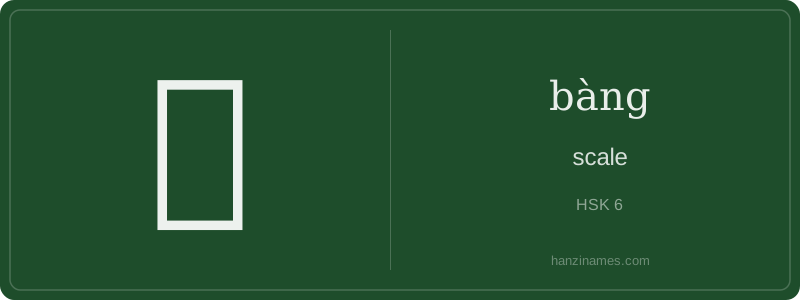
磅 is widely used in modern Chinese for mechanical and analog weighing devices — especially in traditional wet markets, pharmacies, and hospitals. A common phrase is ‘上磅秤’ (shàng bàngchēng), meaning 'step onto the scale', frequently heard during health check-ups. While not part of classical idioms, it appears in 20th-century technical documents describing trade standards and metrology reforms under the PRC, where standardizing scales was vital for fair commerce.
The character is a phono-semantic compound: 石 (shí, 'stone') is the semantic component (indicating weight/measurement), and 旁 (páng) serves as the phonetic component — though pronunciation shifted to bàng over time. This reflects how many Chinese characters evolved through sound changes while retaining visual logic.
Hi students! Today we’re learning the character 磅 (bàng), which means 'scale' — specifically a weighing scale, like the kind you stand on to check your weight. It’s pronounced with the fourth tone, so make sure your voice drops sharply: bàng. Though it looks complex with 15 strokes, notice its left side is the ‘stone’ radical (石), telling us it’s related to something solid or heavy — historically, early scales used stone weights!
This character is not about digital displays or abstract measurement — it’s deeply tied to physical weighing. You’ll see it in words like 磅秤 (bàngchēng), meaning 'platform scale', commonly used in markets and clinics across China. It’s an HSK Level 6 word, so it appears in advanced reading — but don’t be intimidated! Once you know the radical and the sound, it becomes much easier to remember.
Also, be careful not to confuse 磅 with similar-sounding characters like 旁 (páng, 'side') or 绑 (bǎng, 'to tie'). The key is the stone radical — if you see 石 on the left, think 'weight', 'scale', or 'measuring mass'. In daily life, you’ll hear this character most often in health contexts ('step on the scale') or commerce ('weighing produce'), never in abstract senses like 'a scale of importance' — that’s different vocabulary entirely.
Example Sentences
Common Compounds
Similar Characters — Don't Mix These Up
Your First Step into Chinese Culture: Get a Chinese Name
Every journey into Chinese begins with a name. Use our free Chinese name generator to create a meaningful, personalized Chinese name that fits you perfectly.
Get My Chinese Name →