祥
Character Story & Explanation
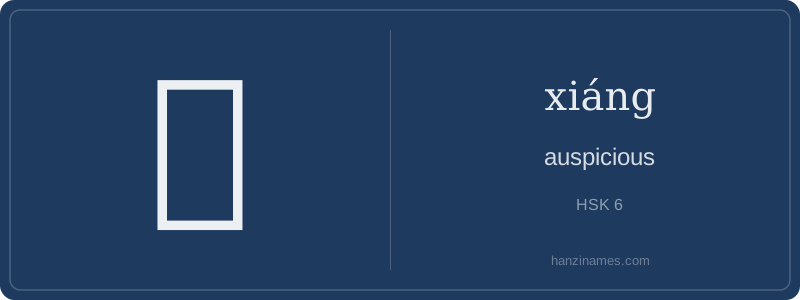
In modern usage, 祥 appears pervasively in formal and ceremonial language: on Spring Festival couplets (chūnlián), red envelopes (hóngbāo), and corporate logos—especially in finance and real estate, where brands like ‘Xianghe Group’ (祥和集团) invoke harmony and prosperity. It features in fixed idioms like 吉祥如意 (jíxiáng rúyì, ‘auspicious and as desired’) and 天降祥瑞 (tiān jiàng xiángruì, ‘auspicious omens descend from heaven’), both attested in Ming-Qing vernacular novels and Qing imperial edicts.
The character’s origin is historically clear: it combines the altar radical 礻 (a variant of 示, ‘altar/ritual’) with 羊 (sheep), reflecting the Zhou practice of using sheep as sacrificial offerings to solicit divine blessing. Oracle bone script lacks this exact form, but bronze inscriptions from the Western Zhou already show early variants pairing ‘altar’ and ‘sheep’—confirming its ritual etymology, not pictographic invention.
As an archaeologist brushing dust from a Han dynasty bamboo slip, I find 祥 inscribed beside ritual calendars—its 礻 (shì) radical unmistakably linking it to ancestral rites and divine sanction. The right side, 羊 (yáng, 'sheep'), was not merely livestock but a sacred offering in Zhou dynasty sacrifices; sheep were deemed ritually pure and symbolically gentle—qualities that connoted heavenly favor. This fusion of altar and sacrifice crystallized into a lexical anchor for ‘auspiciousness’ long before paper existed.
The character’s ten-stroke form stabilized by the Qin standardization, yet its semantic weight deepened during the Eastern Han, when scholars like Xu Shen recorded it in the *Shuōwén Jiězì* as ‘the manifestation of heaven’s will through harmonious omens.’ Unlike generic ‘good,’ 祥 implied observable, cosmologically aligned signs: unseasonal blossoms, double-yolked eggs, or auspicious cloud formations—all documented in imperial court records as portents warranting ceremonial response.
Excavated Mawangdui silk manuscripts reveal 祥 used in divination contexts—not as vague hope, but as a technical term distinguishing ‘favorable omens’ (吉祥) from ‘neutral signs’ (徵) or ‘inauspicious ones’ (妖). Its presence in funerary texts underscores how deeply it permeated conceptions of posthumous harmony: a well-ordered afterlife required *xiáng*, just as a well-ordered state did. This wasn’t superstition—it was a grammar of cosmic reciprocity.
Example Sentences
Common Compounds
Similar Characters — Don't Mix These Up
Your First Step into Chinese Culture: Get a Chinese Name
Every journey into Chinese begins with a name. Use our free Chinese name generator to create a meaningful, personalized Chinese name that fits you perfectly.
Get My Chinese Name →