绣
Character Story & Explanation
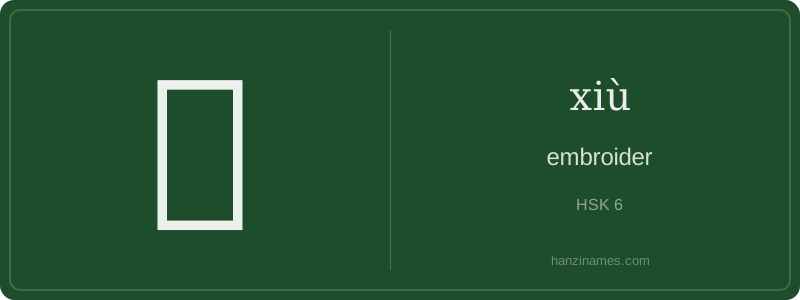
绣 appears in classical texts such as the Book of Rites (Lǐjì, c. 3rd century BCE), prescribing embroidered insignia for official robes based on rank. Today, it remains vital in cultural preservation: the Suzhou Embroidery Research Institute trains artisans, and ‘Xiù’ features in idioms like 锦绣前程 (jǐn xiù qián chéng, 'a brilliant future'—literally 'brocade-and-embroidery future'), evoking vivid, auspicious imagery. It also appears in modern contexts like fashion brands (e.g., Shang Xia) reviving traditional motifs.
The character’s form evolved from seal script, where 纟 (silk radical) + 宿 (xiù, phonetic component) combined to indicate embroidery—reflecting its origin as a phono-semantic compound. While not pictographic, its structure transparently links material (silk) and sound, consistent with Han dynasty standardization.
绣 (xiù) is a verb meaning 'to embroider' and a noun meaning 'embroidery'—a refined textile art deeply embedded in Chinese material culture. Unlike generic sewing, 绣 specifically denotes the decorative stitching of patterns with silk or thread on fabric, often by hand. Its radical 纟 (sī), meaning 'silk', immediately signals its association with fine textiles and craftsmanship, anchoring it linguistically to China’s ancient sericulture heritage.
In Chinese aesthetics, embroidery transcends mere decoration: it conveys auspicious symbolism (e.g., peonies for prosperity, phoenixes for harmony) and reflects regional identities—Suzhou, Hunan, Guangdong, and Sichuan each boast UNESCO-recognized intangible cultural heritage embroidery styles. This cultural weight elevates 绣 beyond technique into the realm of embodied tradition and intergenerational knowledge.
Western equivalents like 'embroidery' share surface similarity but differ in cultural resonance. In Europe, embroidery historically signaled class (e.g., Tudor royal portraiture) or domesticity (Victorian samplers), whereas in China, it was integral to imperial court attire, bridal wear, and religious banners—and mastered by professional artisans, including many women who gained social recognition through their skill. The character thus carries layers of gendered artistry, regional pride, and ritual significance rarely mirrored in Western lexical counterparts.
Example Sentences
Common Compounds
Similar Characters — Don't Mix These Up
Your First Step into Chinese Culture: Get a Chinese Name
Every journey into Chinese begins with a name. Use our free Chinese name generator to create a meaningful, personalized Chinese name that fits you perfectly.
Get My Chinese Name →