耗
Character Story & Explanation
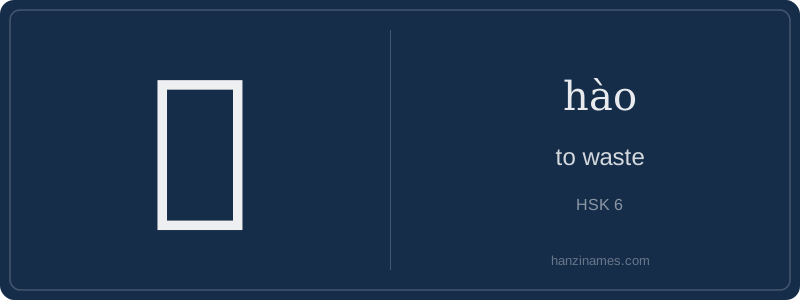
In daily life, 耗 is most commonly heard in tech and efficiency contexts: 手机耗电快 (shǒujī hào diàn kuài) — 'My phone drains battery quickly' — reflecting its core sense of measurable resource depletion. It appears in official language too: China’s 14th Five-Year Plan (2021–2025) repeatedly uses 能源消耗 (néngyuán xiāohào, 'energy consumption') when setting carbon intensity targets. A well-documented idiom is 坐耗光阴 (zuò hào guāngyīn), 'to idle away time', recorded in Ming-dynasty moral texts and still taught in middle-school literature classes.
The character’s form has no pictographic origin. It is a Han-dynasty phono-semantic compound: 耒 (radical, indicating agricultural labor → extended to 'exertion/consumption') + 毛 (phonetic component, máo → hào via historical sound shift). No oracle bone or bronze inscription evidence exists; its earliest verified forms appear in Han bamboo slips from Juyan and Zhangjiashan, consistently meaning 'to deplete' in grain and labor inventories.
Our detective begins at the crime scene: the character 耗 (hào), first attested in seal script (c. 3rd century BCE) and standardized in clerical script during the Han dynasty. Its left side, 耒 (lěi), is the ‘plow’ radical — a clue pointing not to waste, but to laborious, repetitive agricultural work. Early uses described the slow, exhausting depletion of resources or energy, like oxen wearing down over seasons of tilling — a metaphorical extension from physical exertion to general consumption.
The right side, 毛 (máo, 'hair'), is phonetic but also semantically suggestive: hair is fine, fragile, and easily lost — reinforcing ideas of gradual loss or diminishment. Unlike characters with clear pictographic origins (e.g., 日 for 'sun'), 耗 evolved through phono-semantic compounding: sound + meaning nuance. No oracle bone inscriptions contain it; its earliest secure appearances are in Han administrative texts tracking grain reserves and manpower — where 'waste' meant real, quantifiable shortfall.
By the Tang and Song dynasties, 耗 broadened into bureaucratic and literary registers: tax records noted 'tax surcharges' (耗米 hào mǐ, 'supplementary rice'), and poets used 耗 to describe time eroding vitality ('years耗ing youth'). Crucially, it never meant reckless squandering (that’s 浪费 làngfèi); rather, 耗 implies unavoidable, often systemic, attrition — like battery drain or bureaucratic friction. This subtle distinction remains vital in modern usage, especially in technical and policy contexts.
Example Sentences
Common Compounds
Similar Characters — Don't Mix These Up
Your First Step into Chinese Culture: Get a Chinese Name
Every journey into Chinese begins with a name. Use our free Chinese name generator to create a meaningful, personalized Chinese name that fits you perfectly.
Get My Chinese Name →