膜
Character Story & Explanation
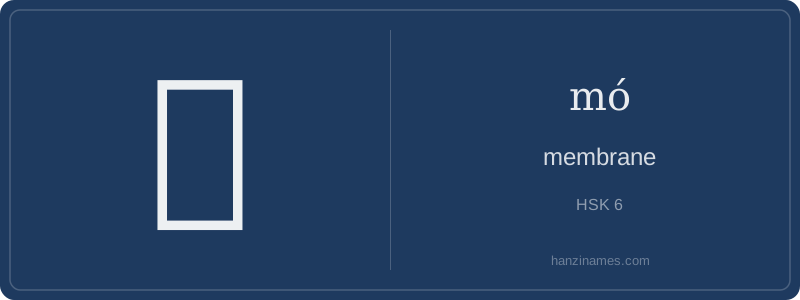
膜 (mó) is widely used in modern Chinese scientific, medical, and technological contexts — e.g., in phrases like 细胞膜 (xìbāo mó, 'cell membrane'), 角膜 (jiǎomó, 'cornea'), and 屏幕保护膜 (píngmù bǎohù mó, 'screen protective film'). It appears in official health guidelines, biology textbooks, and consumer electronics packaging. While no classical idiom centers solely on 膜, it’s essential in standardized terms like 半透膜 (bàntòu mó, 'semi-permeable membrane'), used since early 20th-century Chinese science translations.
The character is a phono-semantic compound: left radical ⺼ ('flesh') signals bodily relevance; right component 模 (mó) provides pronunciation and conceptual nuance — 'model' or 'template', reflecting membranes’ role as selective, structured interfaces. Its earliest documented use appears in late Qing dynasty medical texts adapting Western anatomy, not oracle bones or bronze inscriptions.
Hi students! Today we’re learning 膜 (mó), a Level 6 HSK character meaning 'membrane' — a thin, flexible layer that covers or separates parts of the body or objects. It’s used in biology (e.g., cell membrane), medicine (eardrum, amniotic membrane), and even tech (touchscreen protective film). Though it looks complex with 14 strokes, notice its structure: left side ⺼ (‘flesh’ radical) shows it relates to the body, and right side 模 (mó, 'model; pattern') hints at its function — membranes act as selective, patterned barriers.
This character appears frequently in scientific and medical Chinese, so mastering it helps you read health articles, lab reports, or even smartphone manuals (since 'film' and 'membrane' share the same word). Don’t worry if it feels technical — many native speakers only encounter it in formal contexts, not daily chat. Still, recognizing it builds confidence with advanced vocabulary and strengthens your understanding of how radicals convey meaning.
Remember: 膜 is *not* used for everyday ‘skin’ (that’s 皮 pí) or ‘layer’ (层 céng). It specifically implies a thin, functional, often biological or synthetic barrier. Pronounce it with a rising second tone (mó), like saying 'more' but with a light upward lift. Practice writing it slowly: start with the flesh radical on the left, then carefully form the right side — note the three horizontal strokes in 模 before the final ‘wood’ component (木).
Example Sentences
Common Compounds
Similar Characters — Don't Mix These Up
Your First Step into Chinese Culture: Get a Chinese Name
Every journey into Chinese begins with a name. Use our free Chinese name generator to create a meaningful, personalized Chinese name that fits you perfectly.
Get My Chinese Name →