荤
Character Story & Explanation
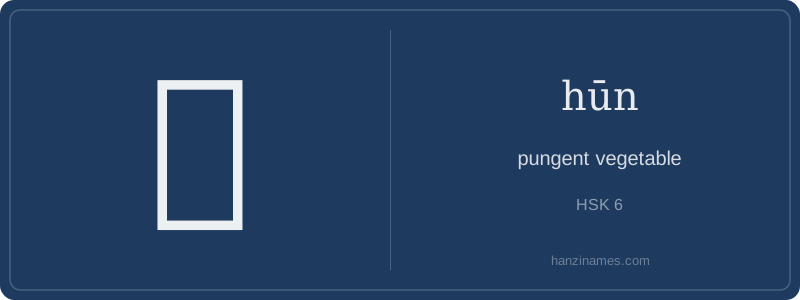
In daily life, 荤 appears most commonly in the compound 荤菜 (hūn cài, 'meat dish')—a usage that evolved from its original meaning. By the Song dynasty (960–1279), textual evidence shows 荤 shifting from 'pungent vegetables' to 'meat', likely due to Buddhist vegetarianism framing both categories as 'non-pure' foods to be avoided. Today, restaurants label dishes as 荤 or 素, and the idiom ‘吃荤不吃素’ (chī hūn bù chī sù) colloquially means ‘to indulge in worldly pleasures.’
The character’s structure is not pictographic but phono-semantic: 艹 (radical, indicating plant-related meaning) + 昏 (hūn, phonetic component and semantic hint—‘dimness’ or ‘confusion,’ echoing classical concerns about these foods clouding the mind). No oracle-bone or bronze inscriptions exist for 荤; it first appears reliably in Han dynasty medical and Daoist texts.
The character 荤 (hūn) opens a window into the Chinese worldview where taste, morality, and cosmology intertwine. Historically, it designated pungent vegetables—like garlic, leeks, and onions—not for their flavor alone, but because their strong aromas were believed to stir passions, disturb meditation, and offend celestial beings. This reflects a Daoist-Buddhist-influenced sensibility that links bodily discipline with spiritual clarity: what enters the mouth shapes the mind’s stillness.
In traditional Chinese medicine and religious practice, avoiding 荤 was never merely dietary—it was ethical hygiene. Monks, nuns, and Daoist practitioners abstained not out of aversion, but as conscious cultivation: suppressing ‘heating’ (yang) influences to nurture yin calm and moral purity. The radical 艹 (grass/plant) signals its botanical origin, while the right side 昏 (hūn, 'dusk' or 'confusion') subtly evokes the mental clouding these foods were thought to cause.
Today, 荤 retains this layered duality: in secular contexts, it often contrasts with 素 (sù, 'vegetarian'), forming the binary 荤素—central to restaurant menus, temple cuisine, and health discourse. Yet its deeper resonance lingers: choosing ‘no 荤’ isn’t just about food; it’s a quiet affirmation of intentionality, self-restraint, and harmony between body, breath, and cosmos—a microcosm of Confucian moderation and Buddhist mindfulness made edible.
Example Sentences
Common Compounds
Similar Characters — Don't Mix These Up
Your First Step into Chinese Culture: Get a Chinese Name
Every journey into Chinese begins with a name. Use our free Chinese name generator to create a meaningful, personalized Chinese name that fits you perfectly.
Get My Chinese Name →