蕾
Character Story & Explanation
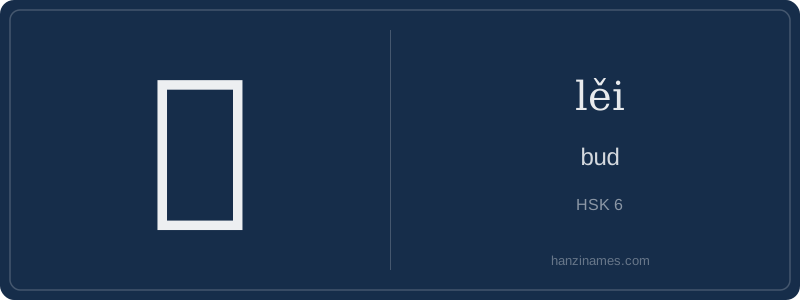
In daily life, 蕾 most commonly appears in compound words like 花蕾 (huā lěi, 'flower bud') and 蕾丝 (lěi sī, 'lace'—a phonetic loanword from French 'lacé'). It’s widely used in botany textbooks, horticultural signage (e.g., greenhouse labels in Kunming Botanical Garden), and skincare branding emphasizing 'youthful radiance'. The phrase 含苞待放 (hán bāo dài fàng, 'bud awaiting bloom')—featuring 蕾’s semantic cousin 包—is a well-documented idiom dating to Ming dynasty texts, symbolizing untapped talent.
The character is not pictographic; its form evolved from seal script where the top clearly shows 艹, and the bottom 雷 was standardized by the Han dynasty as a phonetic component. No oracle bone or bronze inscriptions contain 蕾—it first appeared reliably in Eastern Han dictionaries like Shuōwén Jiězì, classified under 艹 with pronunciation linked to 雷.
Imagine walking through Hangzhou’s West Lake in early spring, where willow branches shimmer with tiny green specks—each a 蕾 (lěi), a delicate flower bud swelling beneath pale bark. This character captures not just botanical emergence but the quiet tension of potential: unopened, yet full of life, waiting for warmth and light. In Chinese aesthetics, the bud symbolizes restrained beauty and promise—never rushed, always patient.
The radical 艹 (grass/plant) anchors 蕾 firmly in the natural world, while the right side 雷 (léi, ‘thunder’) hints at energy and resonance—not literal thunder, but the vital force that stirs dormant life. Historically, classical poets like Du Fu used related imagery to evoke renewal after hardship; 蕾, though rare in Tang poetry itself, became central in modern literary metaphors for youth, creativity, and social awakening.
In contemporary China, 蕾 appears frequently in brand names (e.g., ‘Lèi’ cosmetics), education materials about plant biology, and feminist discourse—‘蕾丝行动’ (Lěisī Xíngdòng, ‘Lace Movement’) playfully reclaims ‘léi’ as a symbol of soft strength. Its HSK 6 status reflects its nuanced, literary register: it’s not for ordering tea, but for writing essays on resilience, growth, or environmental hope.
Example Sentences
Common Compounds
Similar Characters — Don't Mix These Up
Your First Step into Chinese Culture: Get a Chinese Name
Every journey into Chinese begins with a name. Use our free Chinese name generator to create a meaningful, personalized Chinese name that fits you perfectly.
Get My Chinese Name →