床
Character Story & Explanation
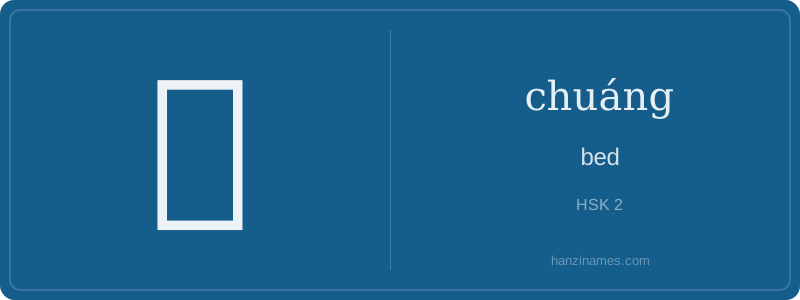
床 appears in classical texts like the Tang poet Li Bai’s famous line ‘床前明月光’ (‘Moonlight before my bed’)—a cultural touchstone evoking solitude and poetic reflection. In daily life, it’s ubiquitous: real estate listings specify ‘主卧带床’ (master bedroom with bed), hospital forms ask ‘床位号’ (bed number), and idioms like ‘床上安床’ (‘a bed on a bed’—redundant duplication) critique unnecessary complexity. It’s also central in phrases like ‘下床’ (get out of bed) and ‘上床’ (go to bed), which carry pragmatic, medical, or even euphemistic connotations depending on context.
The character’s earliest attested form (Small Seal Script, c. 200 BCE) shows 广 over 木 (wood), confirming its original meaning as a wooden frame structure—documented in excavated Han dynasty bamboo slips describing ‘漆床’ (lacquered bed). No oracle-bone form survives, but archaeological finds (e.g., Mawangdui tombs, 2nd c. BCE) confirm raised wooden beds were status symbols for elites, reinforcing its association with dignity and care.
床 (chuáng) is far more than furniture—it embodies the Chinese worldview of rest as foundational to harmony. In traditional cosmology, the bed anchors the domestic realm, a microcosm of heaven and earth where yin energy gathers at night. Its placement in homes follows feng shui principles, reflecting the belief that bodily stillness aligns with cosmic order. This quiet centrality mirrors Confucian ideals: the bed is where filial duty begins (caring for elders’ rest) and where life begins (births often occurred at home beds before modern hospitals).
The radical 广 (guǎng), meaning 'broad' or 'roofed expanse', frames 床 not as a mere object but as sheltered space—suggesting protection, containment, and social boundary. Unlike Western ‘bed’ as isolated sleep station, 床 historically hosted multiple functions: dining, receiving guests, studying, and even ancestral rituals. Its semantic breadth reveals how Chinese culture treats interior spaces as fluid, relational, and morally charged—not neutral backdrops but active participants in ethical life.
This character also subtly challenges individualism. A single bed (单人床) is practical; yet shared sleeping (e.g., parents with young children, siblings) remains common in rural and intergenerational households—reflecting values of closeness, responsibility, and resource-sharing. Even modern urban apartments prioritize the bed’s centrality in floor plans, underscoring its symbolic weight: not just where one sleeps, but where one returns, recovers, and reconnects with family and self—a quiet axis of human continuity.
Example Sentences
Common Compounds
Similar Characters — Don't Mix These Up
Your First Step into Chinese Culture: Get a Chinese Name
Every journey into Chinese begins with a name. Use our free Chinese name generator to create a meaningful, personalized Chinese name that fits you perfectly.
Get My Chinese Name →