袱
Character Story & Explanation
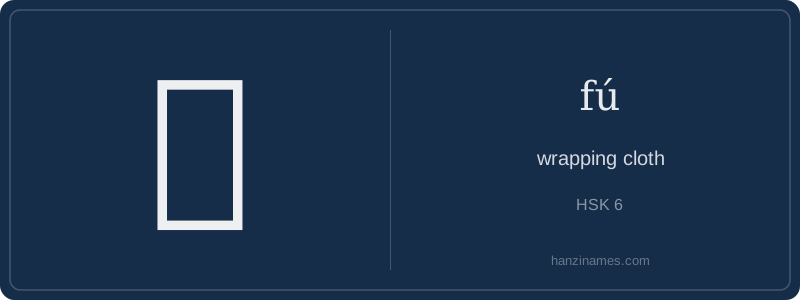
袱 is rarely used independently in contemporary spoken Mandarin but survives in set phrases and regional customs. The most documented usage is in the term 红袱子 (hóng fú zi), a red cloth used to cover wedding gifts, auspicious objects, or temple offerings — symbolizing good fortune and respect. It also appears in historical texts like the Ming Shi (History of Ming), listing household items including 'blue-dyed cotton 袱' for transporting grain. In rural northern China, elders still refer to small cloth bundles for carrying steamed buns or ritual incense as 袱.
The character’s form is not pictographic but phono-semantic: the left side 衤 (clothing radical) signals meaning; the right side 复 (fù) provides sound. Though 复 itself evolved from a pictograph of 'a house with repeated layers', in 袱 it functions purely phonetically — no visual depiction of cloth exists in its strokes.
The Chinese character 袍 (fú) is often confused with 袱, but note: the correct character here is 袱 (fú), meaning 'a cloth used to wrap or cover' — not to be mistaken for the homophone 袍 (páo), meaning 'robe'. 袱 belongs to the 衤 (clothing) radical, indicating its semantic link to textiles and attire. Its 11-stroke structure combines the clothing radical on the left with 复 (fù) on the right, which originally meant 'to repeat' but here serves phonetically. This character reflects traditional Chinese material culture, where reusable cloths played essential roles in daily life, transport, and ritual.
In contrast to Western equivalents like napkins, handkerchiefs, or gift-wrapping paper — often single-use or decorative — the 袱 was typically a durable, multi-purpose square or rectangular cloth, frequently made of cotton or silk. It served practical functions: carrying goods, bundling clothes, covering offerings, or even as a makeshift sling. Unlike Western packaging norms centered on disposability and branding, the 袱 emphasized thrift, reuse, and symbolic modesty — especially when covering sacred or valuable items.
Historically, the 袱 appears in Ming and Qing dynasty records describing household inventories and funeral rites, where specific types — like the 'red wedding 袱' or 'incense offering 袱' — carried ritual significance. In modern usage, it’s largely archaic in daily speech but persists in fixed expressions and regional customs. Its cultural weight lies not in novelty but in quiet utility: a humble textile that mediated between person and object, privacy and presentation, the mundane and the ceremonial — much like a Swiss Army knife of fabric in pre-industrial China.
Example Sentences
Common Compounds
Similar Characters — Don't Mix These Up
Your First Step into Chinese Culture: Get a Chinese Name
Every journey into Chinese begins with a name. Use our free Chinese name generator to create a meaningful, personalized Chinese name that fits you perfectly.
Get My Chinese Name →