裕
Character Story & Explanation
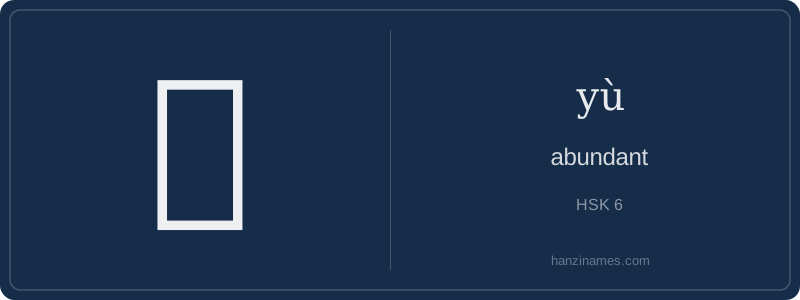
In modern China, 裕 appears frequently in official discourse and formal writing: the State Council’s ‘Rural Revitalization Strategy’ (2018) uses 共同富裕 (gòngtóng fùyù, ‘common prosperity’) as a core policy goal—where 裕 emphasizes equitable, lasting abundance, not just GDP growth. It’s also embedded in well-known idioms like 从容不迫,裕如应付 (cóngróng bùpò, yùrú yìngfù), meaning ‘to handle challenges calmly and with ease.’
The character combines 衤 (‘clothing,’ radical 145) and 谷 (‘valley/grain’). Per the *Shuōwén Jiězì* (121 CE), 裕 was defined as ‘abundant clothing and food,’ confirming its origin as a semantic compound—not a pictograph—reflecting early Han-era values of basic sufficiency as the root of social harmony.
Imagine walking through Suzhou’s Pingjiang Road at dawn—stone bridges arch over canals, silk shop owners unfurl vibrant bolts of fabric, and a tea master arranges porcelain cups with quiet confidence. This scene embodies 裕 (yù): not mere wealth, but a deep, serene abundance—of resources, time, culture, and grace. In classical Chinese thought, 裕 describes a society or person whose needs are fully met without excess, reflecting Confucian ideals of balanced prosperity.
The character’s radical 衤 (clothing) signals its historical link to material sufficiency—originally implying ‘enough clothing for all,’ a foundational marker of social stability in agrarian China. Over time, its meaning expanded to denote intellectual, moral, and spiritual richness—e.g., 裕如 (yù rú), describing effortless competence. It appears in formal registers: government white papers on rural revitalization, corporate sustainability reports, and literary essays on cultural continuity.
Unlike flashy synonyms like 富 (fù, ‘rich’), 裕 carries dignity and sustainability. You won’t see it on street banners or e-commerce ads—it’s reserved for contexts where abundance is measured in resilience, not revenue. Its twelve-stroke structure flows deliberately: left-side 衤 (5 strokes) grounds the character; right-side 谷 (7 strokes) evokes fertile valleys—literally and metaphorically the source of enduring plenty.
Example Sentences
Common Compounds
Similar Characters — Don't Mix These Up
Your First Step into Chinese Culture: Get a Chinese Name
Every journey into Chinese begins with a name. Use our free Chinese name generator to create a meaningful, personalized Chinese name that fits you perfectly.
Get My Chinese Name →