锦
Character Story & Explanation
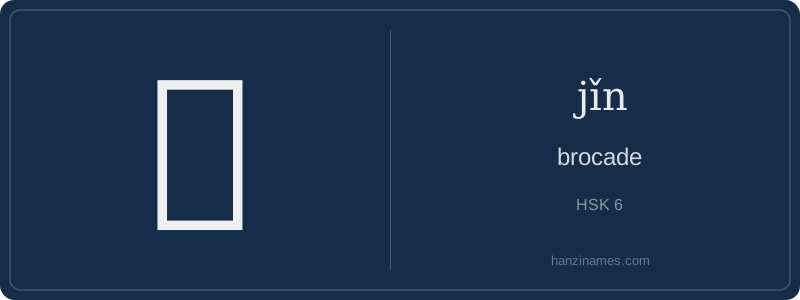
Historically, 锦 was documented as early as the Warring States period (475–221 BCE) and flourished under the Han and Tang dynasties, when Sichuan’s Shu brocade and Suzhou’s Yun brocade were imperial tributes. The character appears in the Classic of Poetry (Shījīng) and Sima Qian’s Records of the Grand Historian, often denoting ceremonial garments or diplomatic gifts. Today, it remains vital in idioms like 锦绣前程 (jǐn xiù qián chéng, 'a brilliant future') and official slogans such as 锦绣河山 ('picturesque rivers and mountains'), evoking national pride and natural beauty.
Visually, 锦 is a phono-semantic compound: the left radical 钅 (jīn, 'metal') is a historical artifact—early bronze inscriptions used a different radical (帛, 'silk'), but during script standardization in the Qin dynasty, scribes mistakenly or systematically substituted 钅 due to phonetic similarity and clerical simplification. The right component 帛 (bó, 'silk fabric') was later replaced by 金 (jīn) in seal script forms, cementing the current structure despite its misleading 'metal' radical.
锦 (jǐn) is a richly textured character meaning 'brocade'—a luxurious, intricately woven silk fabric historically reserved for imperial courts and elite ceremonies in China. Unlike plain silk, brocade features raised patterns, often with gold or silver threads, symbolizing opulence, artistry, and auspiciousness. Its cultural weight extends beyond textiles: 锦 frequently appears in metaphors for excellence, beauty, or auspicious outcomes—much like how 'silk' or 'velvet' evoke refinement in English, but with deeper ritual and literary resonance.
In Western contexts, the closest equivalents are not single words but layered concepts: Renaissance damask (woven with floral motifs), Byzantine purple-dyed imperial silks, or French Gobelin tapestries—each signifying power, divine favor, and elite patronage. Yet 锦 carries unique connotations of harmony between craft and cosmology: traditional brocades often incorporate dragons, phoenixes, or cloud motifs representing heavenly mandate and cosmic order—ideas rarely embedded so deliberately in Western textile symbolism.
The character’s enduring presence in modern Chinese reflects continuity rather than archaism. Phrases like 锦上添花 (jǐn shàng tiān huā, 'adding flowers to brocade')—meaning 'gilding the lily'—are still used daily in media and business. Even tech companies name products with 锦 (e.g., Huawei’s 'Honor Magic UI 锦绣主题') to evoke elegance and premium quality. This semantic stability—from Han dynasty tribute records to WeChat status updates—makes 锦 a rare linguistic bridge between ancient craftsmanship and contemporary aspiration.
Example Sentences
Common Compounds
Similar Characters — Don't Mix These Up
Your First Step into Chinese Culture: Get a Chinese Name
Every journey into Chinese begins with a name. Use our free Chinese name generator to create a meaningful, personalized Chinese name that fits you perfectly.
Get My Chinese Name →