鸽
Character Story & Explanation
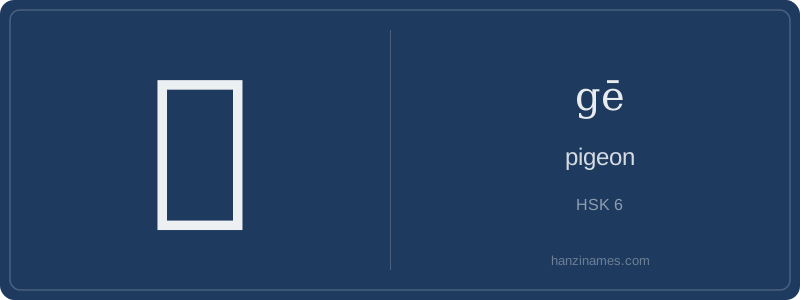
鸽 is commonly used in modern Chinese daily life—especially in phrases like 鸽子笼 (gēzi lóng, 'pigeon loft') and in news reports about urban pigeon management or avian flu prevention. Historically, carrier pigeons were documented in Song Dynasty military manuals (e.g., the 11th-century *Wujing Zongyao*) for battlefield messaging. The character also appears in idiomatic expressions such as 鸽子蛋 (gēzi dàn), metaphorically denoting rarity and value.
鸽 is a phono-semantic compound: the left component 合 (hé) provides approximate pronunciation (gē evolved from hé via historical sound change), while the right radical 鸟 (niǎo) indicates meaning—'bird'. This structure was standardized in the Qin-era Small Seal Script and confirmed in Han Dynasty bamboo slips; no oracle bone form survives, as pigeons weren’t lexically distinct in earliest writing.
The Chinese character 鸽 (gē) represents a pigeon or dove—small, gentle birds long associated with peace, messages, and fidelity. Unlike English, which distinguishes ‘pigeon’ (urban, common) from ‘dove’ (symbolic, often white), Mandarin uses 鸽 for both, relying on context or modifiers like 白鸽 (bái gē, 'white dove') for symbolic nuance. Its radical 鸟 (niǎo, 'bird') immediately signals avian meaning, anchoring it in the broader semantic category of birds.
In Chinese culture, pigeons historically served practical roles: carrier pigeons were used in military communications as early as the Tang Dynasty, and domesticated pigeons remain popular among hobbyists in cities like Beijing and Shanghai. Unlike Western Christian iconography—where the dove signifies the Holy Spirit—Chinese symbolism emphasizes harmony, marital loyalty (e.g., in wedding motifs), and auspiciousness, not divine revelation.
HSK Level 6 placement reflects its specialized but culturally embedded usage—not everyday vocabulary like 猫 (māo, 'cat'), but essential for reading literature, news about animal conservation, or idioms like 鸽子蛋 (gēzi dàn, 'pigeon egg', meaning something small yet valuable). Learners benefit from linking 鸽 to real-world contexts: urban wildlife, traditional art, and modern environmental discourse—making it richer than a simple zoological term.
Example Sentences
Common Compounds
Similar Characters — Don't Mix These Up
Your First Step into Chinese Culture: Get a Chinese Name
Every journey into Chinese begins with a name. Use our free Chinese name generator to create a meaningful, personalized Chinese name that fits you perfectly.
Get My Chinese Name →