丹
Character Story & Explanation
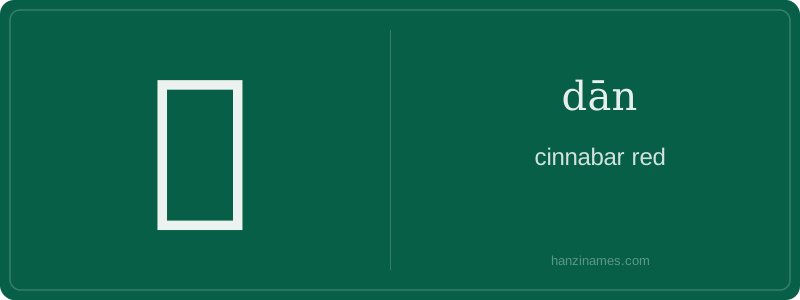
丹 has been used since at least the Warring States period (475–221 BCE) in medical texts like the *Huangdi Neijing* and Daoist alchemical writings to denote cinnabar-based elixirs. Today, it appears in common phrases like 丹心 (dān xīn, 'sincere/loyal heart') — famously used in Song dynasty poet Wen Tianxiang’s poem expressing unwavering loyalty. It’s also in modern compound words like 丹麦 (Dānmài, 'Denmark'), where 丹 is phonetic, not semantic.
The character’s earliest form in seal script (c. 3rd century BCE) resembles a square container with a dot inside — likely depicting cinnabar stored in a vessel. Archaeological evidence confirms cinnabar was mined and used ritually in Shang and Zhou dynasties, making this origin well-documented and widely accepted by paleographers.
Hi students! Let’s explore 丹 (dān), a simple but rich character with just four strokes. It originally referred to cinnabar — a bright red mineral used in ancient Chinese ink, medicine, and alchemy. That deep, vivid red became its core meaning. Though it looks minimal, every stroke matters: the dot (丶) on top symbolizes emphasis or essence, and the three horizontal lines below suggest layers — like mineral deposits or concentrated energy.
This character is not just about color; it carries cultural weight. In traditional Chinese medicine and Daoist practices, 丹 meant ‘elixir’ — especially the legendary ‘golden pill’ of immortality. So when you see 丹, think beyond red paint: think vitality, refinement, and inner transformation. Its simplicity hides depth — perfect for beginners to appreciate how Chinese characters layer meaning visually and historically.
Don’t confuse 丹 with other red-related characters like 红 (hóng) — which is everyday ‘red’, like a red apple. 丹 is more poetic and technical: it appears in formal terms like 丹心 (dān xīn, ‘loyal heart’) or 丹药 (dān yào, ‘elixir’). As you practice writing it, remember: one dot, then three even horizontals — no curves, no hooks. This clean structure mirrors its symbolic meaning: purity, sincerity, and focused energy.
Example Sentences
Common Compounds
Similar Characters — Don't Mix These Up
Your First Step into Chinese Culture: Get a Chinese Name
Every journey into Chinese begins with a name. Use our free Chinese name generator to create a meaningful, personalized Chinese name that fits you perfectly.
Get My Chinese Name →