佷
Character Story & Explanation
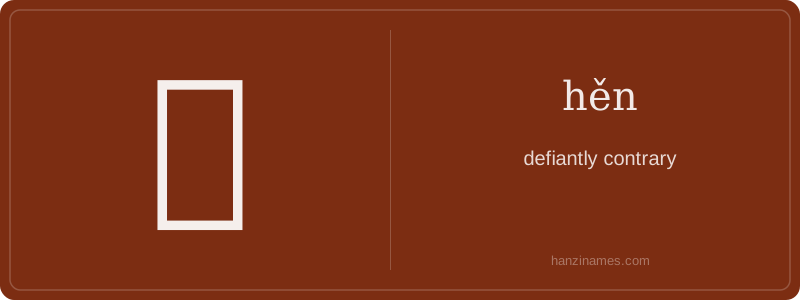
佷 (hěn) appears in classical Chinese texts such as the Shuōwén Jiězì (121 CE), where it is defined as 'to oppose, to go against' (違也). It survives today only in fixed literary compounds like 佷戾 (hěn lì), meaning 'willfully defiant and harsh', occasionally seen in historical biographies or critiques of tyrannical rulers. You’ll never hear it in speech — even native speakers may misread it as 很 without context. It’s absent from all modern dictionaries aimed at learners and does not appear in any HSK vocabulary list.
The character’s form combines the person radical (亻) and the phonetic element 戋 (jiān), which appears in other characters like 残 (cán, 'cruel') and 钱 (qián, 'money'). This suggests an early association with intensity or extremity — fitting its meaning of stubborn opposition. No oracle bone or bronze script forms are attested; its earliest secure appearance is in Han dynasty seal script.
Dear students, let’s clarify an important point right away: the character 佷 (hěn) is *not* the same as the common word 很 (hěn), meaning 'very'. Though they share the same pinyin, 佷 is a rare, literary character — not used in modern spoken or written Chinese for 'very'. It appears almost exclusively in classical texts and historical documents, where it means 'to act contrary to' or 'to defy' — often with a strong moral or hierarchical connotation, like defying authority, ritual norms, or ancestral teachings.
This character belongs to the 'human' (亻) radical category, indicating its connection to human behavior or agency. Its structure combines the person radical (亻) with the phonetic component 戋 (jiān), which historically contributed pronunciation but also subtly evokes 'smallness' or 'repetition' — perhaps hinting at persistent, willful opposition. Because it’s so infrequent, you won’t encounter it in HSK exams or everyday conversation.
As a beginner, your priority should be mastering very common characters like 很 (hěn) — which *is* essential for daily communication. Confusing 佷 with 很 is a frequent mistake, especially since their pronunciations are identical. Always double-check the written form: 很 has 日 (sun/day) on the right; 佷 has 戋. Recognizing this distinction helps avoid serious misunderstandings in advanced reading — especially when studying pre-modern Chinese philosophy or legal texts.
Example Sentences
Common Compounds
Similar Characters — Don't Mix These Up
Your First Step into Chinese Culture: Get a Chinese Name
Every journey into Chinese begins with a name. Use our free Chinese name generator to create a meaningful, personalized Chinese name that fits you perfectly.
Get My Chinese Name →