俶
Character Story & Explanation
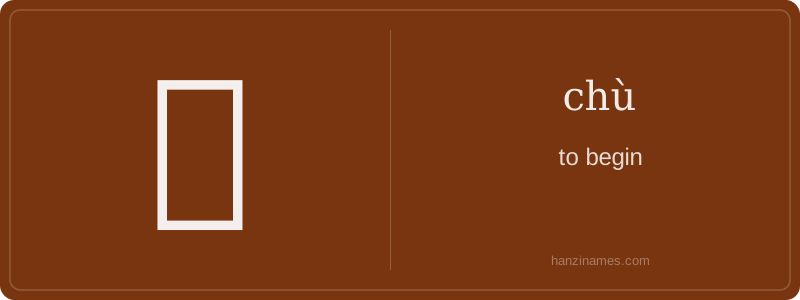
俶 is archaic and highly literary—virtually absent from daily speech or modern media. Its most documented usage is in the classical phrase 俶载 (chù zǎi), appearing in the *Book of Songs* (*Shījīng*) to describe the sage-king initiating agricultural rites at spring’s onset. It also appears in formal historical texts like the *Zuo Zhuan*, always paired with solemn, state-level actions—never casual or colloquial ones.
The character’s earliest attested form is in bronze inscriptions (c. 1000–500 BCE), where it combines the ‘person’ radical (亻) with 叔 (shū, ‘younger uncle’), suggesting a semantic link to ‘junior yet responsible initiation’. Though not pictographic, its structure signals relational authority: a person stepping into duty—not alone, but within generational and ritual continuity.
The character 俶 (chù) embodies a quiet, dignified sense of inception—not the loud fanfare of a grand opening, but the subtle, deliberate first step of something meaningful. In classical Chinese thought, beginnings are not neutral events; they carry moral weight and cosmic resonance. To 'begin' is to align intention with virtue, echoing Confucian ideals where the sincerity of the outset shapes the entire endeavor’s integrity.
This character appears almost exclusively in literary and ceremonial contexts, revealing how traditional Chinese culture venerates intentionality over speed or scale. Unlike modern Mandarin’s everyday verb for 'to start' (开始 kāishǐ), 俶 evokes reverence—used when describing the founding of dynasties, the launch of virtuous governance, or the first stirrings of seasonal change in poetic almanacs. It reflects a worldview where origins are sacred thresholds.
Its rarity in spoken language underscores a deeper cultural principle: true beginnings are not merely chronological but ethical and aesthetic. To use 俶 is to invoke continuity with antiquity—to frame an action as part of a cultivated, principled lineage. This mirrors the Daoist notion of 'wu wei' (effortless action): beginning not with force, but with poised readiness. Thus, 俶 is less about motion than about moral orientation at the threshold of becoming.
Example Sentences
Common Compounds
Similar Characters — Don't Mix These Up
Your First Step into Chinese Culture: Get a Chinese Name
Every journey into Chinese begins with a name. Use our free Chinese name generator to create a meaningful, personalized Chinese name that fits you perfectly.
Get My Chinese Name →