偎
Character Story & Explanation
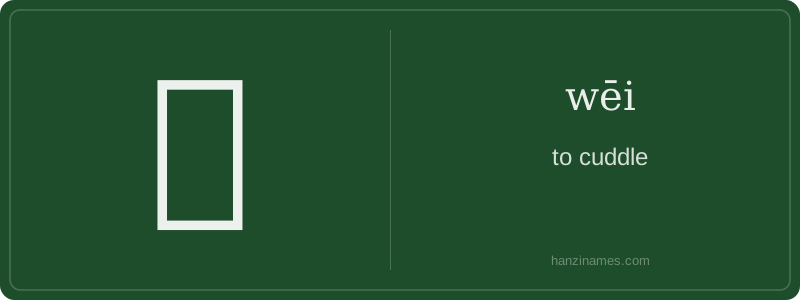
偎 is commonly used in modern written Chinese—especially in literature, caregiving discourse, and lyrical prose—to depict gentle, supportive physical closeness. It appears in phrases like 偎依 (wēiyī, 'to lean on each other for support') and the idiom 相偎相依 (xiāng wēi xiāng yī), meaning 'mutually leaning on and relying upon one another', often describing enduring familial or spousal bonds. Historically, it appears in Ming-Qing vernacular novels and Tang-Song poetry to evoke quiet intimacy amid hardship.
The character combines the 亻 (person) radical with 威 (wēi, 'power, authority'), suggesting 'a person drawing strength or shelter from another'. Though not pictographic, its structure reflects semantic compounding: closeness as a source of quiet resilience—not dominance, but shared vulnerability and care.
The character 偎 (wēi) conveys intimate, gentle physical closeness—like leaning into or nestling against someone for warmth and comfort. Unlike English 'cuddle', which often implies playfulness or romance, 偎 carries a tender, quiet, almost protective nuance, frequently used in familial or vulnerable contexts (e.g., a child偎ing an elder). It emphasizes mutual sheltering rather than active affection, evoking softness and emotional safety.
This verb reflects a deeply relational aspect of Chinese affective culture: closeness is expressed not through grand gestures but through subtle, embodied proximity. It’s rarely used for casual or public displays; instead, it appears in literature, caregiving descriptions, or poetic imagery—suggesting intimacy grounded in trust and quiet solidarity, not passion or performance.
Compared to Western equivalents like 'snuggle' or 'huddle', 偎 lacks connotations of cuteness or urgency. While 'huddle' implies shared defense against cold or danger, and 'snuggle' often suggests romantic or infantile warmth, 偎 is more neutral and dignified—it can describe an elderly person leaning on a cane (figuratively), a poet ‘leaning’ on classical allusion, or a child seeking solace. Its cultural weight lies in restraint and resonance, not exuberance.
Example Sentences
Common Compounds
Similar Characters — Don't Mix These Up
Your First Step into Chinese Culture: Get a Chinese Name
Every journey into Chinese begins with a name. Use our free Chinese name generator to create a meaningful, personalized Chinese name that fits you perfectly.
Get My Chinese Name →