偬
Character Story & Explanation
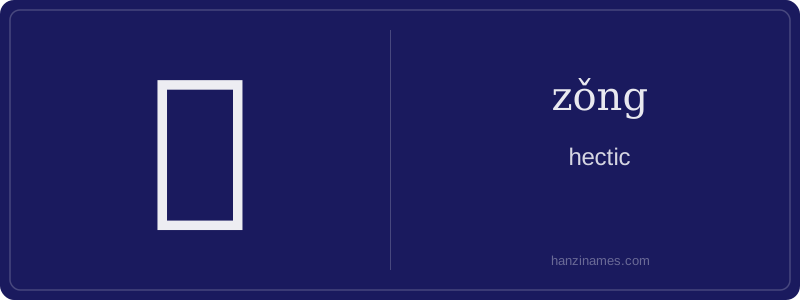
偬 is almost exclusively used in the compound 倥偬 (kǒng zǒng), meaning 'hurried and busy', especially under pressure or during pivotal moments—e.g., wartime, political transition, or major life changes. It appears in classical texts like the Book of Han and modern literature (e.g., Lu Xun’s essays) to describe turbulent historical periods or personal upheaval. Modern usage remains literary: news headlines may cite '战事倥偬' (wartime urgency), and graduates might say '毕业前夕,日程倥偬' ('in the hectic days before graduation').
The character has no pictographic origin—it is a phono-semantic compound: 亻 (person radical) + 宗 (zōng, phonetic, meaning 'ancestral temple' or 'origin'). Though 宗 suggests rootedness, 偬 paradoxically conveys temporal dislocation—busyness so intense it disrupts routine. Thus, its form mirrors its meaning: a person (亻) anchored by tradition (宗), yet thrust into motion.
偬 (zǒng) is a character that embodies the Chinese cultural acknowledgment of busyness—not as chaos, but as purposeful, socially embedded activity. Its radical 亻 (person) signals human agency, while the phonetic component 宗 (zōng) evokes ancestral reverence and institutional continuity. In classical usage, it rarely stands alone; instead, it appears in compound words where urgency meets duty—suggesting that ‘being busy’ is not merely personal stress, but participation in relational and societal rhythms.
This reflects a Confucian-inflected worldview: time is not abstract or individualized, but measured in obligations—to family, office, ritual, or state. The character subtly resists Western dichotomies between ‘work’ and ‘life’; rather, busyness gains moral weight when aligned with role-based responsibility. Even today, calling someone ‘倥偬’ implies they’re immersed in meaningful, often self-sacrificing, service—not just overwhelmed.
Moreover, 偬 appears almost exclusively in literary or formal registers, never in casual speech—a linguistic marker of gravity. Its rarity underscores how Chinese culture linguistically elevates certain states of engagement: not all busyness is equal, only that which serves harmony, continuity, or collective purpose earns this elegant, time-honored glyph.
Example Sentences
Common Compounds
Similar Characters — Don't Mix These Up
Your First Step into Chinese Culture: Get a Chinese Name
Every journey into Chinese begins with a name. Use our free Chinese name generator to create a meaningful, personalized Chinese name that fits you perfectly.
Get My Chinese Name →