瓜
Character Story & Explanation
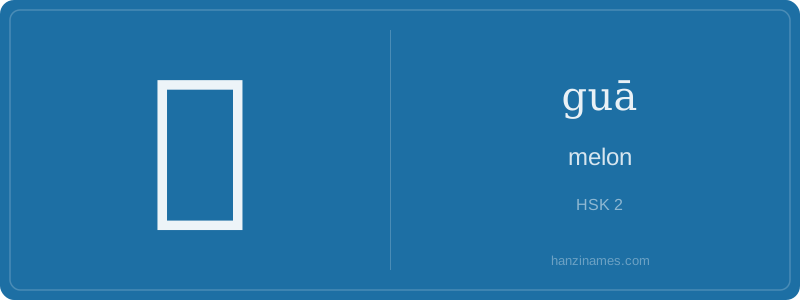
瓜 appears in classical texts like the *Book of Songs* (Shījīng, c. 11th–7th c. BCE), where it symbolizes familial continuity—e.g., ‘绵绵瓜瓞’ (miánmián guā dié), meaning ‘endless gourds and vines’, used to wish long-lasting lineage. In daily life, it’s central to seasonal cuisine (e.g., bitter gourd in summer for ‘clearing heat’ per Traditional Chinese Medicine) and idioms like ‘瓜田李下’ (guātián lǐxià, ‘under melon fields and plum trees’), warning against suspicion by avoiding compromising situations.
Graphically, 瓜 is a documented pictograph: oracle bone and bronze inscriptions show a stylized gourd with vine and tendrils. The modern form retains the top curve (瓜蒂, fruit stem), vertical line (vine), and two side strokes (gourd lobes)—a rare case where the character’s origin remains visually legible after 3,000 years.
The character 瓜 (guā) embodies China’s agrarian roots and reverence for nature’s bounty. As one of the earliest cultivated plants in East Asia—archaeologically confirmed in Hemudu culture (c. 5000 BCE)—the gourd family symbolizes fertility, resilience, and humble sustenance. Its presence in folk art, roof ornaments, and wedding motifs reflects a worldview where abundance is not ostentatious but quietly generative, rooted in soil and season.
Unlike Western dichotomies of wild/tamed or ornamental/edible, 瓜 bridges categories: it is food (watermelon, bitter gourd), tool (dried gourds as ladles or containers), medicine (e.g., winter melon soup for cooling ‘heat’ in TCM), and metaphor (‘a melon falls when ripe’ implying natural timing). This holistic view reveals a cultural logic where utility, symbolism, and ecology intertwine seamlessly.
In modern Chinese thought, 瓜 also carries gentle irony—phrases like ‘傻瓜’ (shǎguā, ‘silly melon’) use agricultural humility to soften criticism, turning a vegetable into linguistic grace. Even internet slang repurposes it: ‘吃瓜群众’ (chīguā qúnzhòng, ‘melon-eating masses’) describes detached onlookers—a playful nod to how deeply food metaphors shape social perception. Thus, 瓜 is more than a fruit: it’s a quiet lens into Chinese relational ethics and cyclical time.
Example Sentences
Common Compounds
Similar Characters — Don't Mix These Up
Your First Step into Chinese Culture: Get a Chinese Name
Every journey into Chinese begins with a name. Use our free Chinese name generator to create a meaningful, personalized Chinese name that fits you perfectly.
Get My Chinese Name →