剽
Character Story & Explanation
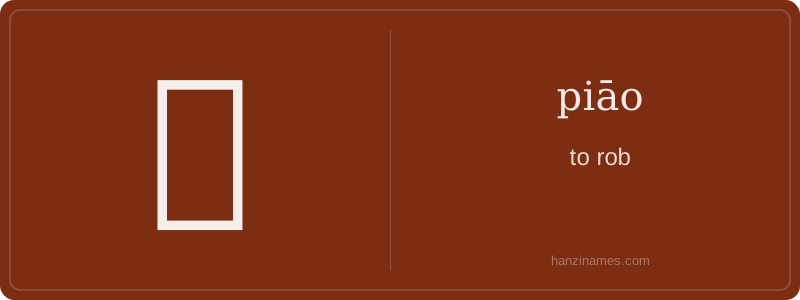
剽 is most commonly used today in the formal, legally charged term 剽窃 (piāoqiè), meaning 'plagiarism' — widely cited in Chinese academic integrity guidelines, university honor codes, and copyright enforcement. The Ministry of Education and China National Intellectual Property Administration frequently use this word in official documents condemning unauthorized copying of texts, code, or designs.
The character’s form combines 票 (piào, originally 'ticket' or 'certificate', here serving phonetically) and 刂 ('knife'). While 票 doesn’t literally mean 'rob', its phonetic role is well-documented in Shuōwén Jiězì (121 CE). Historically, 剽 appears in texts like the *Records of the Grand Historian* describing frontier raids — always implying swift, violent seizure, never petty theft.
Hi students! Today we’ll learn 剿 (piāo), a character meaning 'to rob' or 'to plunder'. Though it looks simple, it carries strong, negative connotations — not for everyday theft like shoplifting, but for violent, large-scale seizing: looting in war, pirating intellectual property, or stealing credit for others’ work. It’s rarely used alone; you’ll almost always see it in compound words like 剽窃 (piāoqiè, 'plagiarize') or historical terms describing banditry.
This character belongs to the 刂 (knife) radical — a clear visual clue that its meaning involves force, cutting, or aggression. Its 13 strokes include sharp, decisive movements, especially the final downward stroke of the knife radical. While it appears in classical texts and modern legal/journalistic language, it’s not common in casual speech — so don’t worry about using it in your first conversations!
As a beginner, focus on recognizing 剽 in written contexts — especially academic or news articles discussing plagiarism or historical conflict. Pronounce it carefully: piāo (first tone, like ‘piao’ in ‘piano’ but with a high, flat pitch). Don’t confuse it with similar-sounding characters like 飘 (piāo, 'to float') — the radical makes all the difference!
Example Sentences
Common Compounds
Similar Characters — Don't Mix These Up
Your First Step into Chinese Culture: Get a Chinese Name
Every journey into Chinese begins with a name. Use our free Chinese name generator to create a meaningful, personalized Chinese name that fits you perfectly.
Get My Chinese Name →