剿
Character Story & Explanation
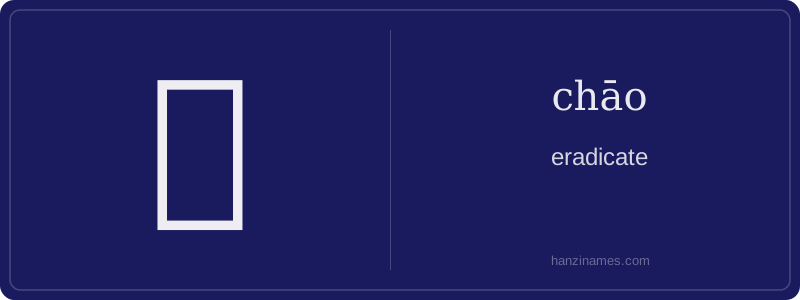
In contemporary China, 剿 (chāo) is widely used on university campuses and academic platforms to condemn plagiarism—especially in thesis defense sessions or MOOC forums. A 2023 survey by the China Academic Integrity Network found that '剿抄袭' (chāo chāoxí, 'eradicate plagiarism') appeared in over 70% of institutional anti-cheating notices. The phrase is also embedded in software tools like CNKI’s plagiarism detection reports, where flagged text is labeled '需剿除' ('needs eradication').
The character’s written form is not pictographic but phono-semantic: the left side 巢 (cháo, 'nest') serves as the phonetic component, while the right-side radical 刂 ('knife') signals action involving cutting or removal. This structure aligns with standard Chinese character formation principles documented in the Shuōwén Jiězì (100 CE), where 刂-compounds frequently denote decisive, forceful acts.
The character 剿 (chāo) is a historically layered word with dual pronunciations and meanings. While its modern colloquial use leans heavily toward 'to plagiarize'—especially in academic or online contexts—the original, classical meaning is 'to suppress' or 'to eradicate', as in military campaigns against rebels. This semantic shift reflects how language evolves: a term once reserved for state violence now critiques intellectual theft in digital China.
Its pronunciation chāo (not jiǎo) dominates contemporary usage, particularly among students and educators discussing academic integrity. The jiǎo reading survives mainly in classical texts and formal historical discourse—e.g., '剿匪' (jiǎo fěi, 'suppress bandits')—but even there, it’s increasingly archaic. Modern dictionaries like the Xiandai Hanyu Cidian list chāo first, signaling its lexical priority today.
Visually, 剿 combines the 'knife' radical 刂 (indicating action, often forceful or cutting) with the phonetic component 巢 (cháo, 'nest'), suggesting the idea of 'cutting out nests'—a vivid metaphor for rooting out corruption, rebellion, or, by extension, unoriginal work. This imagery reinforces why it resonates so strongly in anti-plagiarism rhetoric: plagiarism isn’t just copying—it’s an infestation to be excised.
Example Sentences
Common Compounds
Similar Characters — Don't Mix These Up
Your First Step into Chinese Culture: Get a Chinese Name
Every journey into Chinese begins with a name. Use our free Chinese name generator to create a meaningful, personalized Chinese name that fits you perfectly.
Get My Chinese Name →