勍
Character Story & Explanation
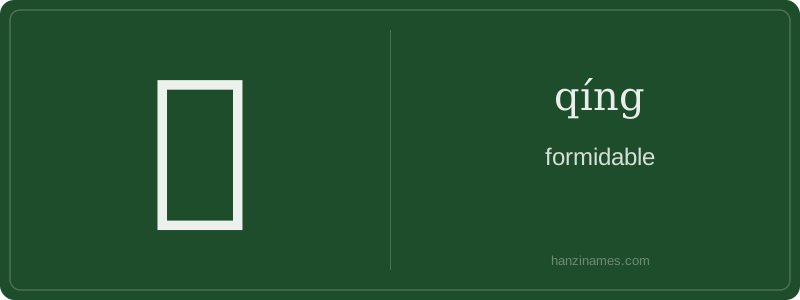
勍 is exceedingly rare in modern spoken Mandarin and absent from the HSK vocabulary lists (HSK Level: Not included). It appears almost exclusively in classical or literary contexts—especially in historical texts describing elite warriors, formidable armies, or natural phenomena of overwhelming scale. A documented usage is in the phrase '勍敌' (qíng dí), meaning 'formidable enemy', found in Song- and Ming-dynasty military records and later revived in 20th-century historical novels like The Romance of the Sui and Tang Dynasties.
The character is a phono-semantic compound: the left radical 力 (lì, 'strength') signals meaning, while the right component 晴 (qíng, 'clear, sunny') provides phonetic cue. Though 晴 means 'clear weather', its use here is purely phonetic—no semantic link to sunlight. No oracle-bone or bronze inscription evidence exists for 勍; it first appeared reliably in Eastern Han dynasty dictionaries like Shuōwén Jiězì (c. 100 CE) as a literary variant for intense strength.
The character 勍 (qíng) embodies a uniquely Chinese conceptualization of force—not merely raw aggression, but concentrated, disciplined, and often righteous power. In classical thought, such strength is rarely celebrated in isolation; it gains moral weight only when aligned with virtue (德), strategy (谋), or just cause (义). This reflects the Confucian and Daoist worldview where power must be tempered by wisdom and restraint—or risk collapsing into chaos.
Unlike Western notions of violence as inherently destructive, 勍 suggests formidable energy that can be constructive: a general’s decisive command, a scholar’s unyielding integrity, or nature’s overwhelming yet orderly force—like a flood that reshapes land but follows cosmic patterns. Its rarity in daily speech underscores its elevated register: it appears not in street arguments but in historiography, military treatises, and literary praise of heroic resolve.
This character invites reflection on how Chinese civilization historically channeled intensity into cultural forms—calligraphy’s vigorous brushstrokes, martial arts’ controlled explosiveness, or poetry’s compressed emotional power. 勍 thus becomes a lens into a deeper truth: strength, to be respected, must be both potent and purposeful—never arbitrary, never untethered from ethics or context.
Example Sentences
Common Compounds
Similar Characters — Don't Mix These Up
Your First Step into Chinese Culture: Get a Chinese Name
Every journey into Chinese begins with a name. Use our free Chinese name generator to create a meaningful, personalized Chinese name that fits you perfectly.
Get My Chinese Name →