勒
Character Story & Explanation
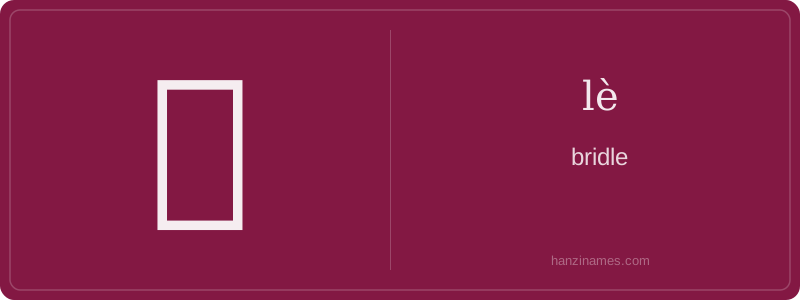
勒 is widely used in modern Chinese in expressions like 勒索 (lèsuǒ — 'extortion'), where it conveys coercive pressure, and in the idiom 勒紧裤腰带 (lēijǐn kù yāodài — 'tighten one’s belt'), meaning to cut expenses during hardship — a phrase popularized after China’s economic reforms in the 1980s. It also appears in official terms like 勒令 (lèlìng — 'official order/command') from administrative language.
The character’s form combines 冓 (originally a pictograph of interwoven beams, later stylized) and 力 (force). While not a pure pictograph like 日 or 月, its structure reflects functional design: controlling force applied through crossed straps — verified in bronze inscriptions and Han dynasty texts describing equestrian gear.
Hi students! Today we’ll learn 勒 (lè / lēi), a character rooted in ancient horsemanship. Its radical 力 (lì) means 'strength' or 'power', and the top part 冓 (gōu) originally suggested interlocking elements — like straps crossing over a horse’s head. This reflects its core meaning: a bridle or halter used to control a horse through physical restraint.
Don’t confuse pronunciation! Say lè when it’s a noun (e.g., 马勒 — horse bridle) or in formal/technical contexts. Use lēi when it’s a verb meaning 'to tighten' or 'to strangle' — think of pulling something tightly, like a rope around the neck. Tone changes signal grammar shifts, a common pattern in Chinese.
This character appears in both classical texts and modern Mandarin. In historical military records, 勒 was used in phrases like 勒马 (lè mǎ — 'rein in the horse'), symbolizing discipline and command. Today, it’s more common in compound words than standalone use — so mastering its compounds is key to real-world fluency!
Example Sentences
Common Compounds
Similar Characters — Don't Mix These Up
Your First Step into Chinese Culture: Get a Chinese Name
Every journey into Chinese begins with a name. Use our free Chinese name generator to create a meaningful, personalized Chinese name that fits you perfectly.
Get My Chinese Name →