咕
Character Story & Explanation
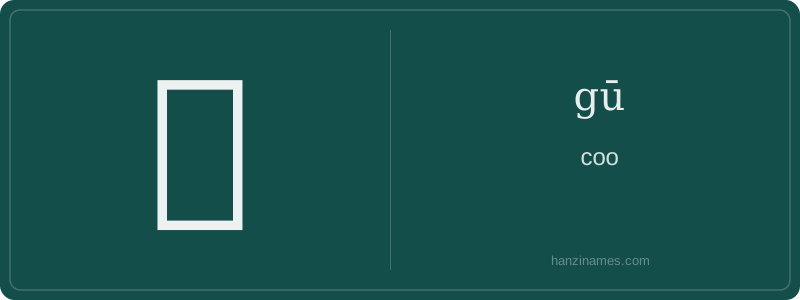
咕 is commonly used in modern Mandarin to mimic low, rhythmic, internal or animal sounds—especially in reduplicated form 咕咕. It appears in standard phrases like 咕噜 (gūlu, stomach growl) and the idiom 咕咚一声 (gūdōng yī shēng, ‘a thud’—often in storytelling, e.g., in the classic children’s tale ‘The Little Rabbit’s Drum’ where a coconut falls into water with a gūdōng). Linguistic corpora (e.g., BCC Corpus) confirm 咕咕 is among the top 5 onomatopoeic reduplications for birds and hunger cues.
The character is a phono-semantic compound: 口 (mouth/sound radical) + 古 (gǔ, phonetic component, approximating gū). It does not appear in oracle bone or bronze inscriptions—it first surfaces reliably in late imperial vernacular texts (e.g., Ming-Qing fiction), reflecting its origin as a phonetic innovation for colloquial sound description, not ancient pictography.
Imagine sitting in a quiet courtyard in Suzhou at dawn—the air is cool and damp, cicadas haven’t yet begun their chorus, but from a nearby persimmon tree comes a soft, rhythmic sound: gū… gū… A turtledove coos gently, its call echoing the character 咕. This onomatopoeic glyph captures not just avian murmurs, but also the hollow gurgle of an empty stomach—like the low rumble you hear when skipping breakfast before a morning tai chi class in Beijing’s Temple of Heaven park.
Visually, 咕 is built around the ‘mouth’ radical 口—a clear signal it’s tied to sound and vocalization. Its right side, 古 (gǔ), serves phonetically, hinting at pronunciation while adding no semantic weight. Unlike characters with deep historical layers like 日 or 木, 咕 emerged later in written Chinese as a phonetic-semantic compound designed specifically to transcribe low, resonant, repetitive sounds—making it a linguistic snapshot of lived sensory experience.
In daily use, 咕 rarely stands alone—it thrives in reduplicated forms like 咕咕 or compounds like 咕噜. It appears in children’s books describing farm animals, medical textbooks noting gastrointestinal sounds (borborygmus), and even internet slang—e.g., 咕了 meaning ‘ghosted’ (a playful extension of ‘disappearing with a soft sound’). Though absent from HSK official lists (HSK Level: Not rated), it’s widely recognized and used across spoken and informal written Chinese.
Example Sentences
Common Compounds
Similar Characters — Don't Mix These Up
Your First Step into Chinese Culture: Get a Chinese Name
Every journey into Chinese begins with a name. Use our free Chinese name generator to create a meaningful, personalized Chinese name that fits you perfectly.
Get My Chinese Name →