蛋
Character Story & Explanation
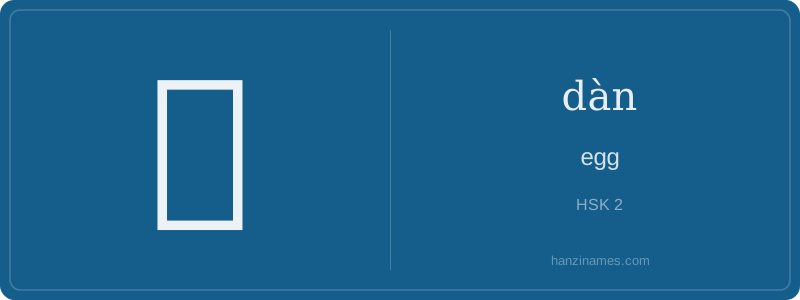
In Beijing’s bustling Xizhimen Market, a vendor shouts, '草鸡蛋!五块钱一盒!' (Cǎo jīdàn! Wǔ kuài qián yī hé!) — 'Free-range eggs! Five yuan a box!' Shoppers inspect cartons stamped with 蛋, comparing labels like 土鸡蛋 (tǔ jīdàn, 'native-breed eggs') or 无菌蛋 (wújūn dàn, 'pasteurized eggs'). The character appears on food safety certifications, restaurant menus, and even health advisories—e.g., 鸡蛋过敏 (jīdàn guòmǐn, 'egg allergy') is among China’s top three food allergy warnings (per 2022 China CDC data).
The character 蛋 originated as a phono-semantic compound in early clerical script (c. 200 BCE–200 CE), combining the phonetic element 曾 (zēng, later simplified to 旦 dàn) and semantic 虫. No oracle bone or bronze inscription evidence exists for 蛋; its earliest confirmed form appears in Han dynasty bamboo slips, consistently meaning 'egg'—never 'insect'—despite the radical.
The character 蛋 (dàn) literally means 'egg'—a fundamental food and symbol in Chinese culture. Its radical 虫 (chóng, 'insect') may seem puzzling at first, but historically reflects ancient classification: eggs of birds, reptiles, and even insects were grouped under the same conceptual umbrella of small, ovular life-bearing objects. This radical signals origin or biological source rather than literal entomology.
With 11 strokes and HSK Level 2 status, 蛋 is among the earliest food-related characters learners encounter. It appears in countless everyday contexts—from breakfast menus to medical terms like 蛋白 (dànbái, 'protein'). Its simplicity belies its semantic richness: it can denote literal eggs, metaphorical 'beginnings' (as in 新鲜蛋, 'fresh egg' implying newness), or even slang ('testicles' in informal speech—a usage documented in modern dictionaries like the Xiāndài Hànyǔ Cídiǎn).
Unlike many pictographs, 蛋 isn’t a direct visual imitation of an egg. Its form evolved from seal script, where the top component 曾 (zēng) served phonetic function while 虫 anchored meaning. Today, it’s a textbook example of a phono-semantic compound—blending sound and sense—and appears in over 30 common compounds, underscoring how deeply eggs permeate Chinese language and daily life.
Example Sentences
Common Compounds
Similar Characters — Don't Mix These Up
Your First Step into Chinese Culture: Get a Chinese Name
Every journey into Chinese begins with a name. Use our free Chinese name generator to create a meaningful, personalized Chinese name that fits you perfectly.
Get My Chinese Name →