唏
Character Story & Explanation
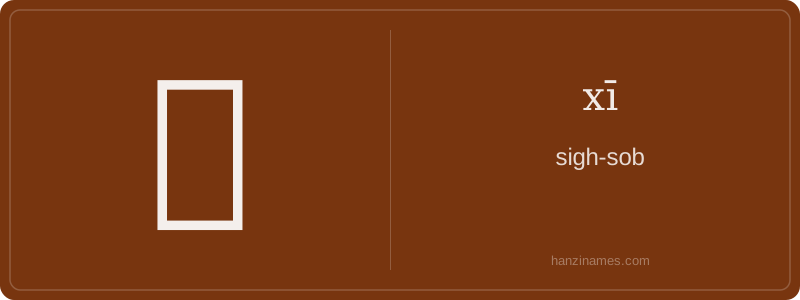
唏 is rarely used alone in modern Mandarin—it almost always appears in fixed reduplicative phrases like 唏嘘 (xīxū) meaning 'to sigh with emotion' or 'to lament', especially in response to fate, loss, or bittersweet nostalgia. It appears in classical poetry and modern essays alike, notably in Lu Xun’s writings and contemporary news reports describing public reactions to tragic events. The phrase 唏嘘不已 ('sighing incessantly') is common in formal media and literature to convey collective empathy.
The character is phonosemantic: 口 (kǒu, 'mouth') as radical signals oral/auditory meaning, while 奚 (xī) serves as the phonetic component. 奚 itself originally depicted a captive servant in oracle bone script—but here it contributes only sound. No pictographic origin exists for 唏; its form has been stable since the Han dynasty clerical script, consistently used for sobbing sounds.
唏 (xī) is an onomatopoeic character representing the soft, breathy sound of quiet sobbing or suppressed weeping—like a sigh mixed with a sniffle. It captures emotional vulnerability rather than loud crying; think of someone holding back tears after grief or tender nostalgia. Unlike generic crying words (e.g., 哭 kū), 唏 emphasizes auditory subtlety and introspective sorrow, often appearing in literary or poetic contexts to evoke pathos without melodrama.
In Western languages, no single word maps perfectly to 唏. English ‘sniffle’ conveys the physical act but lacks emotional weight; ‘sob’ is too forceful. German ‘Seufzer’ (sigh) or French ‘sanglot’ (sob) come closer—but neither carries 唏’s distinct blend of restraint, breathiness, and literary resonance. Japanese uses ひっく (hikku) for hiccup-like sobs, yet still misses 唏’s quiet dignity.
Culturally, 唏 reflects a Confucian-tinged aesthetic valuing emotional moderation: sorrow is felt deeply but expressed quietly. This contrasts with Western dramatic traditions where catharsis often demands vocal intensity (e.g., Shakespearean wailing or operatic lament). In Chinese storytelling, a character ‘唏’-ing signals poignant understatement—a tear held, a breath caught—not a breakdown. Its power lies in what it omits: no wail, no words, just the fragile sound of feeling too much.
Example Sentences
Common Compounds
Similar Characters — Don't Mix These Up
Your First Step into Chinese Culture: Get a Chinese Name
Every journey into Chinese begins with a name. Use our free Chinese name generator to create a meaningful, personalized Chinese name that fits you perfectly.
Get My Chinese Name →