唧
Character Story & Explanation
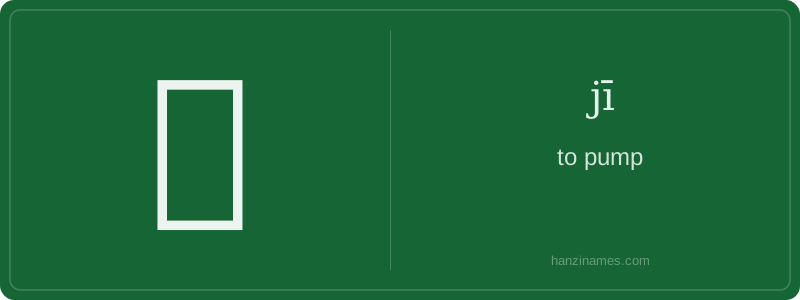
Historically, 唧 appears in Qing-dynasty technical texts describing hydraulic devices and early steam-related machinery, where it denoted mechanical pumping action — notably in translations of Western engineering terms during the late 19th century. Today, it survives most commonly in the word 唧筒 (jītǒng), meaning 'pump' (literally 'pump tube'), widely used in rural areas and historical contexts. You’ll also hear it in reduplicated form 唧唧 (jījī) — though this more often means 'chirping' (like crickets) or 'whispering', showing semantic drift from its original mechanical sense.
The character is not pictographic — no oracle-bone or bronze script forms survive. Its modern shape combines 口 (indicating sound) and 畟 (a phonetic component). In daily life, Chinese speakers use 唧 mainly in technical terms (e.g., 唧油, jīyóu — 'to pump oil') or expressive writing (e.g., describing a leaky faucet: 水唧唧地流出来 — 'water spurts out with a hissing sound').
Hi students! Let’s explore 唧 (jī) — a fun, onomatopoeic character that mimics the sound of pumping or squirting. It belongs to the 口 (mouth) radical family, meaning it’s closely tied to sounds, speech, or oral actions — not literal mouth movements, but vocalizations that imitate mechanical or fluid actions. Though its core dictionary meaning is 'to pump', you’ll rarely see it used alone in modern Mandarin; instead, it shines in reduplicated forms or compound words where sound and action blend.
This character is not part of the official HSK vocabulary list (HSK 1–6), so it’s considered *non-HSK* — useful for understanding native speech and technical contexts, but not required for standardized exams. Its 10 strokes follow a clear structure: 口 on the left, then the right component 畟 (jī), which historically relates to ‘repeated action’ and reinforces the rhythmic, repetitive nature of pumping.
Don’t confuse 唧 with characters like 吸 (xī, 'to suck') or 抽 (chōu, 'to draw/pull'). While all involve fluid movement, 唧 emphasizes the *audible, rhythmic output* — think of a hand pump hissing air, a syringe ejecting liquid, or even a cartoonish 'squeak!' sound effect. Native speakers often use it playfully or descriptively, especially in spoken language and literature — making it a great window into Chinese sound symbolism.
Example Sentences
Common Compounds
Similar Characters — Don't Mix These Up
Your First Step into Chinese Culture: Get a Chinese Name
Every journey into Chinese begins with a name. Use our free Chinese name generator to create a meaningful, personalized Chinese name that fits you perfectly.
Get My Chinese Name →