啕
Character Story & Explanation
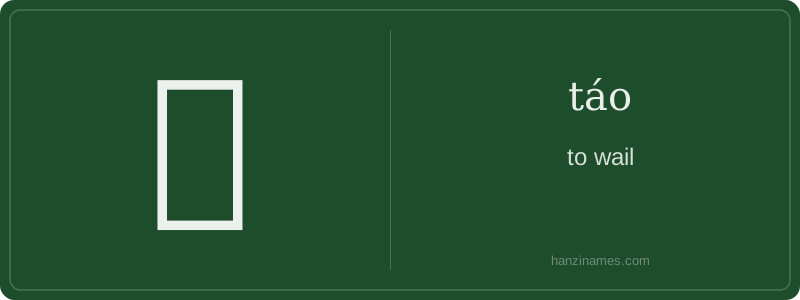
啕 is rare in modern spoken Mandarin but persists in literary, dramatic, and emotive written contexts — especially in classical-style poetry, funeral eulogies, and traditional opera scripts. It appears in the fixed idiom 啼哭号啕 (tí kū hào táo), meaning 'to weep, sob, and wail uncontrollably', found in Ming-Qing novels like *Jin Ping Mei* and documented in Qing dynasty mourning manuals. Contemporary usage is largely stylistic: writers deploy 啕 for heightened pathos, never in casual speech.
The character has no pictographic origin (no oracle-bone or bronze inscriptions exist). Instead, it’s a phono-semantic compound formed during the late imperial period: 口 (radical, indicating vocal action) + 逃 (phonetic, táo, also evoking emotional ‘flight’ from composure). Today, Chinese learners encounter it mainly in idioms or when reading classical mourning texts — not in daily conversation.
Our detective work begins at the scene: the character 啕 (táo), an 11-stroke verb meaning 'to wail' — a raw, unrestrained cry of grief or pain. Its radical 口 (mouth) immediately signals vocal expression, anchoring it in the domain of sound and speech. The right component, 逃 (táo, 'to flee'), is not merely phonetic but subtly semantic: wailing often accompanies emotional flight — a body’s instinctive retreat from unbearable sorrow. This duality — voice + escape — makes 啕 more visceral than generic crying verbs like 哭 (kū).
Zooming in on historical script evidence, 啕 appears no earlier than the late Ming or early Qing dynasties in vernacular literature, notably in mourning narratives and opera libretti. It’s absent from oracle bone, bronze, or seal scripts — confirming it’s a later lexical innovation, born when Chinese needed sharper onomatopoeic nuance for intense lamentation. Unlike ancient characters carved for ritual use, 啕 emerged from spoken urgency, then hardened into writing to capture the shuddering, breathy timbre of uncontrolled weeping.
Forensic stroke analysis reveals deliberate kinetic design: the first three strokes of 口 form a tight, enclosing frame — like lips compressing before a sob — while the 逃 component descends with accelerating momentum (the dot, then the slanting stroke, then the long捺 ‘nà’), mimicking the explosive release of a wail. Even its pinyin táo echoes the sharp, open-mouthed vowel /aʊ/, reinforcing phonosemantic unity. This isn’t just a symbol; it’s a choreographed gesture in ink — a cry made visible.
Example Sentences
Common Compounds
Similar Characters — Don't Mix These Up
Your First Step into Chinese Culture: Get a Chinese Name
Every journey into Chinese begins with a name. Use our free Chinese name generator to create a meaningful, personalized Chinese name that fits you perfectly.
Get My Chinese Name →