卖
Character Story & Explanation
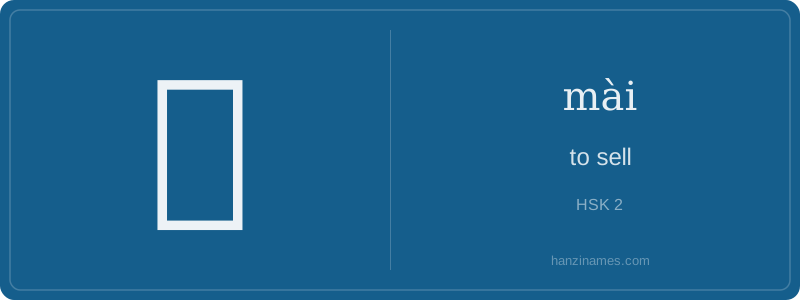
卖 is ubiquitous in daily life—from street vendors shouting ‘卖西瓜!’ (mài xīguā! — ‘Selling watermelons!’) to e-commerce platforms like Taobao displaying ‘热销商品’ (rèxiāo shāngpǐn, ‘best-selling products’). It appears in idioms like ‘卖官鬻爵’ (mài guān yù jué), a historically documented phrase from the Han dynasty referring to the corrupt sale of official posts—a practice condemned in official histories like the Book of Han.
The character evolved from seal script, where it combined 十 (shí, ‘ten’, used phonetically) and 买 (mǎi, ‘to buy’, now simplified to 买) with an added ‘X’-shaped stroke representing goods exchanged. Though its earliest forms aren’t pictographic, its modern shape (8 strokes, radical 十) solidified during the Qin standardization of script—reflecting its foundational role in economic language.
The character 卖 (mài) embodies more than commercial exchange—it reflects Confucian-influenced values where selling is not merely transactional but relational. In traditional Chinese society, the act of selling carried ethical weight: a merchant’s reputation depended on honesty, fair pricing, and respect for the buyer. This worldview persists in modern phrases like ‘童叟无欺’ (tóng sǒu wú qī)—‘no deception of children or elders’—still seen on shop signs, revealing how ‘selling’ is culturally bound to integrity and social harmony.
Unlike Western notions that often separate economics from morality, 卖 implicitly embeds responsibility: the seller bears duty toward community welfare. Even today, haggling in markets isn’t just about price—it’s a ritual of mutual face-saving and trust-building. The character thus serves as a quiet anchor to a worldview where commerce is embedded in human connection, not abstract markets.
This relational lens extends to compound words: 卖力 (mài lì, ‘to exert oneself’) uses 卖 metaphorically—not ‘selling effort’ literally, but offering one’s energy wholeheartedly, as if placing it on the table for others to receive. Such semantic extensions reveal how deeply the concept of ‘giving forth’ (with sincerity and accountability) is woven into the cultural DNA of 卖—making it a linguistic window into China’s enduring emphasis on virtue in action.
Example Sentences
Common Compounds
Similar Characters — Don't Mix These Up
Your First Step into Chinese Culture: Get a Chinese Name
Every journey into Chinese begins with a name. Use our free Chinese name generator to create a meaningful, personalized Chinese name that fits you perfectly.
Get My Chinese Name →