喁
Character Story & Explanation
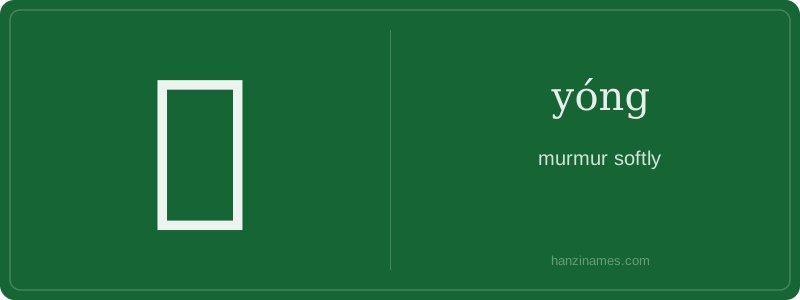
喁 is almost exclusively used in the reduplicated form 喁喁 (yóngyóng), appearing in classical texts like the Book of Han (《汉书》) and Tang dynasty poetry to describe soft, continuous murmuring—either of fish rising in water or people whispering in harmony. Today, it survives mainly in literary writing, journalism, and formal speeches when evoking gentle, unified voices (e.g., 'the citizens’ 喁喁 discussions'). You’ll find it in Xinhua News Agency reports quoting public sentiment or in high-school Chinese textbooks analyzing Su Shi’s essays.
The character is not pictographic—it evolved from seal script where 口 (mouth) combines with 禺 (yú, a phonetic component indicating pronunciation, not meaning). 禺 itself originally depicted a mythical monkey-like creature, but here serves purely as a sound hint. So 喁 is a phono-semantic compound: 口 for category (oral action), 禺 for approximate sound. No oracle-bone inscriptions contain 喁—it first appears reliably in Han dynasty bamboo slips.
Hi students! Let’s explore 喁 (yóng), a vivid, poetic character you’ll rarely hear in daily conversation—but one that sparkles in classical and literary Chinese. It belongs to the ‘mouth’ (口) radical family, signaling speech or oral action. Though it looks simple, its meaning is highly specific: to gently lift the mouth above water—like fish rising to the surface, mouths parting the ripples. This isn’t about speaking loudly; it’s about quiet, rhythmic emergence—almost like breathing underwater.
Don’t confuse 喁 with common speech verbs like 说 (shuō) or 讲 (jiǎng). 喁 is onomatopoeic and visual—it evokes the soft *yōng-yōng* sound of fish mouths breaking water or people murmuring softly in unison. Its alternate reading yú appears only in rare historical compounds (e.g., 喁喁, yúyú), but yóng is standard today. Because it’s so imagery-rich, it’s often used in parallel with other characters to create rhythm and mood—not standalone commands or questions.
This character teaches us how Chinese can capture subtle natural phenomena with precision. Think of it as ‘aquatic lip movement’: not splashing, not gasping—just serene, synchronized surfacing. It appears mostly in fixed two-character words (like 喁喁) or literary descriptions of rivers, ponds, or crowds murmuring like schools of fish. While you won’t use it ordering food or texting friends, recognizing 喁 helps you appreciate classical poetry, nature essays, and even modern metaphors about collective quietude.
Example Sentences
Common Compounds
Similar Characters — Don't Mix These Up
Your First Step into Chinese Culture: Get a Chinese Name
Every journey into Chinese begins with a name. Use our free Chinese name generator to create a meaningful, personalized Chinese name that fits you perfectly.
Get My Chinese Name →